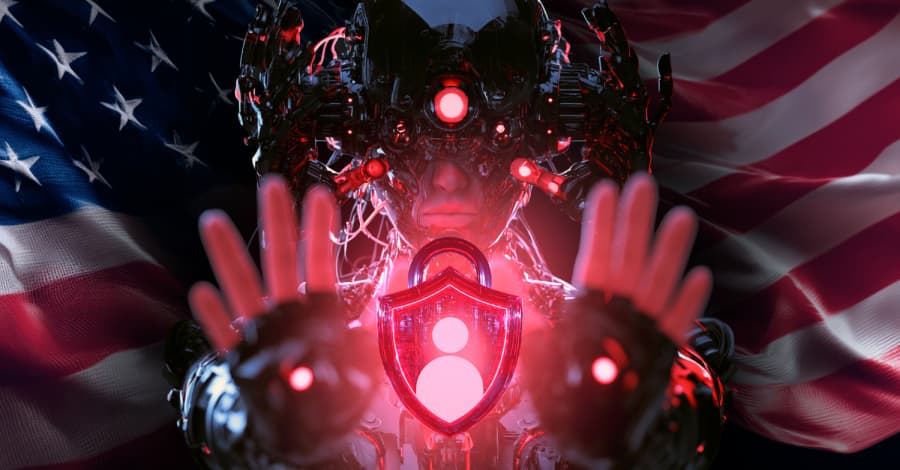
(opens original source in a new tab)South China Morning PostDisputes over AI, robotics, trade mount ahead of planned Xi-Trump summit in USIn the months leading up to President Xi Jinping’s planned September visit to Washington for a summit with US President Donald Trump, a series of smaller trade and technology rifts has emerged between the world’s two largest economies. From tensions over Chinese artificial intelligence models and new US restrictions on advanced robotics, to optical modules and an expanded forced labour blacklist, this piece breaks down the latest developments shaping US-China economic ties. 1. AI models under... (opens original source in a new tab)Sylvia Ma·5 August 2026
Industry News (opens original source in a new tab)ScienceDailySitting up straight may improve your mood and decision-makingA simple change in posture may subtly affect how people feel and make decisions. Participants who sat upright reported greater feelings of pride and took more successful risks in a virtual balloon game than those who hunched over. Most did not realize researchers had influenced their posture, helping rule out the possibility that they were merely responding to expectations. The results suggest workplace ergonomics could influence more than physical comfort. (opens original source in a new tab)5 August 2026
(opens original source in a new tab)South China Morning PostChinese optical-module stocks rebound as analysts downplay ‘mild’ AI curbs proposed by USShares of China’s leading optical-module makers clawed back early losses on Wednesday after analysts downplayed the impact of proposed US restrictions that could block the firms from future American AI data centres. They noted that the rules would likely leave current supply chains intact and face significant hurdles because of America’s heavy reliance on Chinese manufacturing. Zhongji Innolight ended the day down 7.3 per cent and 6.7 per cent in Shenzhen and Hong Kong, respectively, while... (opens original source in a new tab)Howard Liu·5 August 2026
(opens original source in a new tab)South China Morning PostChinese and Western firms are teaming up even as governments fightIn an era defined by escalating geopolitical tensions and the weaponisation of supply chains, a counterintuitive phenomenon is taking root in the industrial heartlands of China, the United States and Europe. While governments in Beijing, Washington and Brussels engage in high-stakes chess matches of tariffs, export controls, sanctions and investment screening mechanisms, a parallel universe of corporate deal-making is flourishing. The prevailing logic among multinational executives is that... (opens original source in a new tab)Bob Savic·5 August 2026
(opens original source in a new tab)South China Morning PostChinese and Western firms are teaming up even as governments fightIn an era defined by escalating geopolitical tensions and the weaponisation of supply chains, a counterintuitive phenomenon is taking root in the industrial heartlands of China, the United States and Europe. While governments in Beijing, Washington and Brussels engage in high-stakes chess matches of tariffs, export controls, sanctions and investment screening mechanisms, a parallel universe of corporate deal-making is flourishing. The prevailing logic among multinational executives is that... (opens original source in a new tab)Bob Savic·5 August 2026
(opens original source in a new tab)Breaking DefenseThe reasons why Group 2 drones are right-sized for the fight[Sponsored] Fuel cell technology lets smaller, more versatile VTOLs handle tasks previously reserved for larger drones. (opens original source in a new tab)Breaking Defense·5 August 2026
Industry News (opens original source in a new tab)ScienceDailyScientists discover the brain cells that keep you motivatedA group of brain cells called orexin neurons appears to help us keep working when reaching a reward becomes increasingly difficult. Blocking their activity weakened motivation in rats, pointing to a possible new target for understanding why people sometimes struggle to sustain goal-directed behavior. (opens original source in a new tab)5 August 2026
(opens original source in a new tab)STAT NewsThe main therapy used for children with autism faces changes under MedicaidQuid-pro-quo vaping policies, ebola vaccine efforts, and more health news from Morning Rounds (opens original source in a new tab)Theresa Gaffney·5 August 2026
(opens original source in a new tab)The Hacker NewsNew OVSwrap Linux Kernel Flaw Lets Local Users Gain Root via Open vSwitchA memory corruption flaw in the Linux kernel's Open vSwitch datapath gives ordinary local users a path to root on a broad set of default-configured distributions, and a public exploit ships with pre-built records for roughly 800 kernel builds. The vulnerability, tracked as CVE-2026-64531 (CVSS score: 7.8) and codenamed OVSwrap by its discoverer, was disclosed by security researcher Asim (opens original source in a new tab)info@thehackernews.com (The Hacker News)·5 August 2026
(opens original source in a new tab)The Hacker NewsKali365 Weaponizes Microsoft Authentication Against US Companies: New Enterprise RiskKali365 is turning a legitimate Microsoft login into a gateway to corporate data. The phishing kit targets US organizations with attacker-controlled device codes that victims approve on Microsoft's real authentication page. Once access and refresh tokens are issued, attackers may retain access to email, documents, and cloud resources, creating a direct path to data exposure, financial fraud, (opens original source in a new tab)info@thehackernews.com (The Hacker News)·5 August 2026
Industry News (opens original source in a new tab)ScienceDaily80-million-year-old snake brain reveals a surprising evolutionary secretAn exceptionally preserved snake fossil from Brazil reveals that early snakes were far more diverse than scientists once thought. Detailed brain reconstructions show that Tametara mirim was adapted for burrowing, while another ancient snake was suited to life above ground. Other fossils point to marine lifestyles as well. By 80 million years ago, snakes were already experimenting with very different habitats and sensory systems. (opens original source in a new tab)5 August 2026