

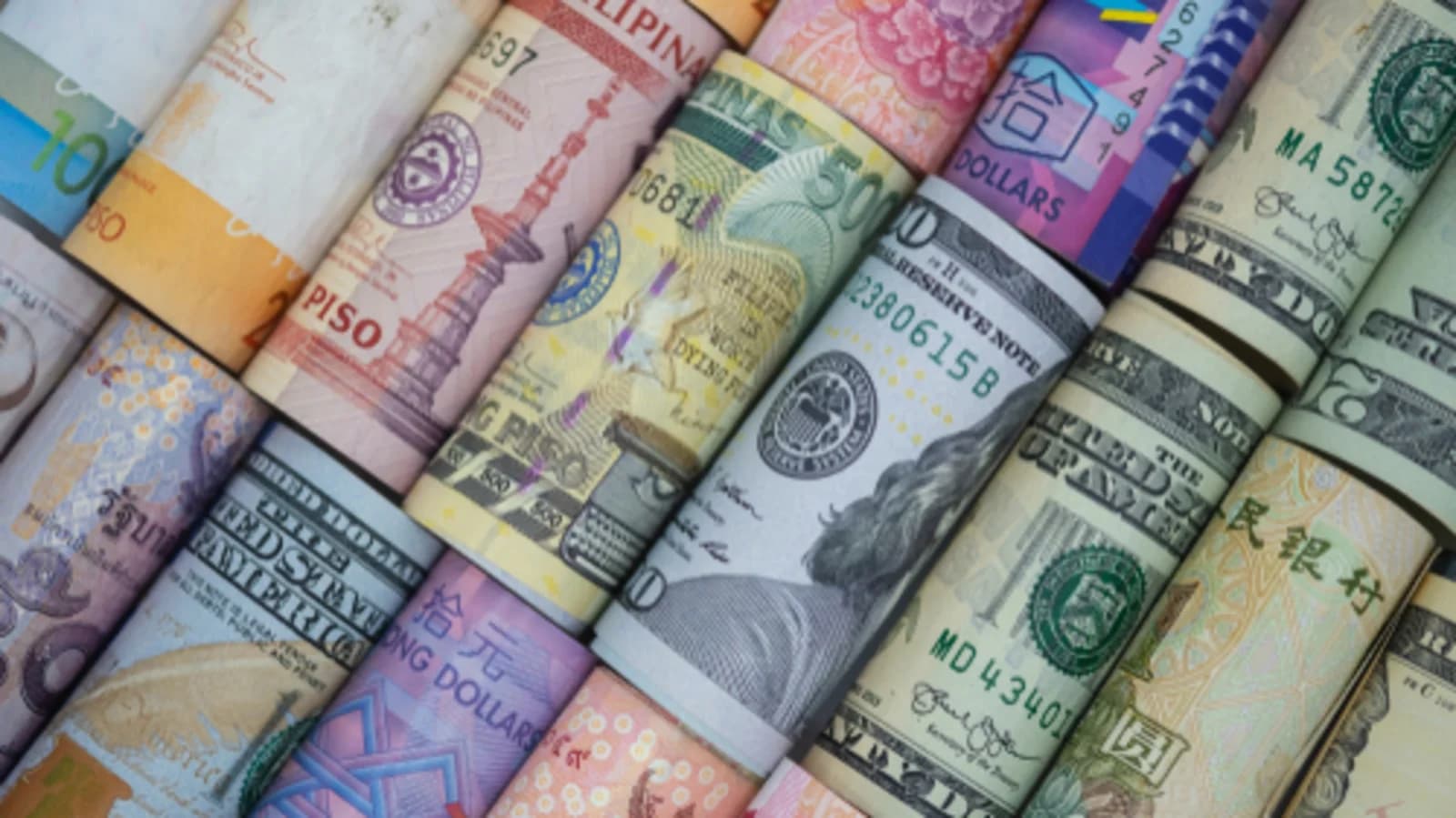
The world is not leaving the U.S. dollar tomorrow.
It is doing something more strategic.
It is learning how to bypass it.
That distinction matters. The dollar remains the strongest currency in global finance. It accounted for 57.13% of allocated global foreign-exchange reserves in the first quarter of 2026, according to IMF COFER data, while the euro stood at 20.03% and the renminbi at just 1.99%. The dollar was also on one side of 89.2% of all foreign-exchange trades in April 2025, according to the Bank for International Settlements.
So this is not a collapse story.
It is a chokepoint story.
For decades, the dollar system worked because it was deep, liquid and efficient. Energy was priced in dollars. Commodities were financed in dollars. Central banks held U.S. Treasuries. Companies cleared payments through dollar banks. The system was so useful that dependence on it felt normal.
But every system built around one dominant route creates a vulnerability.
When that route is open, everyone uses it.
When access becomes uncertain, people build side roads.
That is what is happening now.
The first chokepoint: reserves can be frozen, redirected or trapped
The freezing of Russian reserves changed the psychology of central banking.
After Russia’s invasion of Ukraine, the U.S. Treasury prohibited transactions involving Russia’s central bank, finance ministry and National Wealth Fund. A sanctions coalition later said about $300 billion in Russian central bank assets had been immobilised.
For Washington and its allies, this was a response to aggression.
For other governments, it revealed the hidden chokepoint inside the reserve system: money held abroad is never only money. It is also subject to the legal system, political decisions and strategic interests of the country or institution holding it.
Belgium is now at the centre of that issue because the Brussels-based clearing house Euroclear holds a large share of Russia’s immobilised central bank assets. Recent reporting said EU countries immobilised about €210 billion in Russian central bank assets after the invasion, with Belgium hosting most of them.
That has created a new debate: not only whether assets can be frozen, but whether profits from those assets — or potentially the assets themselves — can be used to support Ukraine. Belgium has been cautious because Euroclear and the Belgian state could face legal and financial retaliation if the structure is challenged. Euroclear has already sued Russia’s central bank in Belgium after a Russian court ordered the clearing house to pay about €220 billion in damages over the immobilised assets.
Canada shows another part of the same trend. Canadian law has been amended to allow restraint, seizure and forfeiture of property linked to sanctioned foreign states or individuals. Canada has already issued orders restraining or seizing Russian-linked assets, including an aircraft at Toronto Pearson and funds connected to sanctioned individuals.
Spain also matters politically. Alongside the Netherlands, Poland and Sweden, Spain has called for the European Union to examine ways to use Russia’s frozen assets for Ukraine.
The message for central banks is not that Canadian, Belgian or Spanish reserves are about to be taken. The point is more structural: once assets are held inside another jurisdiction, they can become caught in that jurisdiction’s laws, sanctions, courts and political decisions.
That is the chokepoint.
A reserve asset may look safe on a balance sheet. But in a crisis, the real question becomes different:
Where is it held? Who controls access? Which court has jurisdiction? Which government can block the transaction?
Once a reserve asset can be frozen, redirected, taxed, litigated or politically trapped, the meaning of “safe” changes.
That is why more governments are buying gold, repatriating reserves, exploring local-currency settlement and building payment systems outside the dollar-centred financial network.
They are not leaving the dollar tomorrow.
They are learning where the exits are.
The second chokepoint: U.S. bonds are liquid, but not neutral
U.S. Treasury bonds remain the deepest sovereign debt market in the world. That is why central banks, pension funds, insurers and governments still use them as the core reserve asset. In June 2026, Japan held about $1.12 trillion in U.S. Treasuries, the United Kingdom about $940 billion, mainland China about $633 billion and Belgium about $483 billion, according to U.S. Treasury data.
That scale is the strength of the system.
It is also the chokepoint.
When foreign governments buy U.S. bonds, they are not only investing in a safe and liquid asset. They are helping finance the U.S. government, the U.S. economy, federal deficits and the wider machinery of American power — including defence spending. That has always been part of the bargain: the world gets liquidity and safety; Washington gets cheaper funding and global financial reach.
But the bargain is becoming harder to ignore.
Foreign holders now face three risks.
The first is market risk. When U.S. yields rise, the value of existing bonds falls. That is not political theory; it is bond mathematics. Reuters reported that U.S. 10-year borrowing costs recently moved close to 5% as inflation, oil prices, fiscal deficits and heavy government and corporate bond issuance unsettled markets.
The second is fiscal and governance risk. The United States is borrowing heavily at a time when investors are already questioning deficits, debt levels and policy discipline. Fitch downgraded the U.S. sovereign rating from AAA to AA+ in 2023, citing expected fiscal deterioration, a growing government debt burden and repeated debt-limit standoffs. The issue is not that the U.S. cannot pay tomorrow. The issue is that the world’s reserve asset is increasingly exposed to domestic political bargaining.
The third is control risk. A Treasury bond may be liquid, but it is still a claim inside the U.S. legal and financial system. Washington can restrict transactions, block payments or freeze access for sanctioned states and institutions. After Russia’s invasion of Ukraine, that risk stopped being theoretical. For governments watching from Beijing, Riyadh, Brasília, Abu Dhabi or New Delhi, the lesson was blunt: an asset can be safe in market terms and vulnerable in political terms at the same time.
That is the deeper concern.
A Treasury bond is reliable.
It is widely accepted.
It can be sold almost anywhere.
But it is also stored inside someone else’s operating system.
Today, that concern is sharpened by the Federal Reserve itself. The Fed remains one of the main pillars of dollar trust, but its decisions are being made in a more politically charged environment. Reuters reported that U.S. consumer inflation rose 3.4% year-on-year in August 2026, increasing expectations of a Fed rate hike, even as President Trump continued pressing for lower rates.
For foreign buyers, this matters. If the Fed tightens, bond prices can fall and global borrowing costs rise. If the Fed is seen as too politically pressured, confidence in U.S. monetary discipline weakens. Either way, countries holding large Treasury portfolios are exposed to decisions they do not control.
That is why the bond market has become part of the de-dollarization story.
The world is not dumping U.S. Treasuries overnight. In June 2026, foreign residents still made large net purchases of long-term U.S. securities, according to the Treasury’s TIC data. But the psychology is changing. Central banks and sovereign investors are asking whether they should keep so much national wealth in assets that can be moved by U.S. inflation, U.S. elections, U.S. debt fights, U.S. sanctions and U.S. strategic priorities.
The risk is not only that U.S. bonds could fall in price.
The risk is that the same bonds used to store another country’s reserves are also used to finance the system that can sanction, pressure or restrict that country.
That is why gold is being bought.
That is why payment alternatives are being tested.
That is why BRICS talks about settlement rails.
That is why China wants more yuan trade.
That is why Gulf states are building optionality.
The Treasury market remains the main road in global finance.
But more countries are starting to ask who owns the road, who sets the tolls, and what happens when Washington decides who is allowed to drive on i
The third chokepoint: payment rails are power
The dollar’s strength is not only the currency itself. It is the infrastructure around it.
Correspondent banks. Clearing systems. Settlement institutions. Sanctions screening. Legal jurisdiction. Messaging networks. Compliance rules.
This is where financial power lives.
If a country cannot clear payments, insure shipments, settle energy trades or access correspondent banking, holding dollars is not enough.
That is why BRICS discussions matter even when they do not produce a single new currency.
BRICS finance ministers and central bank governors recently called for more practical solutions for cross-border payments among member countries, including systems that are faster, cheaper, more accessible, transparent and safe. Reuters also reported that BRICS Pay is being developed to link members’ fast-payment systems and enable cross-border settlement without relying on dollar-based banks.
This is not a dollar replacement.
It is a bypass.
Digital currency is part of the side-road system
Central-bank digital currencies will not replace the dollar by themselves.
A CBDC still needs legal trust, convertibility, liquidity, compliance rules, identity systems, cyber resilience and central-bank cooperation.
But CBDCs can create new settlement rails.
India is pushing to link central bank digital currencies across BRICS countries for cross-border payments, although Reuters reports that technical and political hurdles remain significant.
Project mBridge shows what this looks like in practice. The BIS says mBridge is a multi-CBDC platform built on distributed ledger technology to enable instant cross-border payments and settlement. It began as a collaboration involving the BIS Innovation Hub, the Bank of Thailand, the Central Bank of the UAE, the Digital Currency Institute of the People’s Bank of China and the Hong Kong Monetary Authority; it reached minimum viable product stage in 2024. Saudi Arabia’s central bank later joined as an MVP participant.
China is also moving on its own track. It wants more yuan use in trade, more payment infrastructure outside Western control and more digital-yuan settlement where it can build acceptance. The renminbi is still small as a reserve currency, but its role in trade finance has grown: the ECB reported that the renminbi’s share of global trade-finance messages through SWIFT rose from 5.5% in 2024 to around 8% in March 2026.
The dollar remains the main road.
But more countries are building side roads.
And in geopolitics, side roads matter.
Gold is moving because custody now matters
Gold is the oldest workaround.
It does not clear invoices. It does not finance supply chains. It does not replace the dollar in oil or LNG markets.
But it has one feature central banks understand: it is not another country’s liability.
That is why gold has returned to the centre of reserve strategy. The World Gold Council’s 2026 central-bank survey found that 89% of reserve managers expect global central-bank gold holdings to increase over the next 12 months, while 74% expect the dollar’s share of global reserves to be lower in five years.
The latest European gold moves make the point clear.
The Dutch central bank has moved about 86 tonnes of gold out of the United States and Canada toward Europe, saying the move improved the deployability of reserves in a crisis. Reports said 59 tonnes were sold in New York and repurchased in London, while more than 27 tonnes were physically moved to the Dutch vault in Zeist before being rebalanced. After the transfer, the Dutch share held in New York fell from around 30–31% to about 18–19%, while London’s share rose sharply.
France has also been reported to have shifted part of its gold out of New York. Kitco, citing StoneX analysis, reported that between June 2025 and January 2026 the Banque de France sold 129 tonnes of gold held in New York and bought it back in Europe, effectively moving the location of that reserve exposure to Paris.
The point is not that Europe is abandoning the dollar.
The point is that even advanced economies are asking a very practical question: in a crisis, where are our reserves, who controls access, and how quickly can we use them?
That is what a chokepoint looks like once it has been discovered.
The AI boom has become part of the financial-risk story
The dollar system is also tied to U.S. capital markets. Those markets are increasingly concentrated around artificial intelligence.
AI may become a major productivity engine. It may justify large investment in chips, data centres, power infrastructure and software. But it also creates concentration risk.
The Bank of England’s July 2026 Financial Stability Report warned that AI can create new macrofinancial vulnerabilities, including increased market concentration, leverage and cyber or operational shocks. Its Financial Policy Committee also noted the risk that a fall in AI-related equity prices could be amplified by high index concentration, momentum-driven positions and rising leverage.
Reuters reported that the BIS head warned AI investment is already large enough to influence global economic conditions, with risks from lofty valuations, market concentration and opaque financing structures if profits fall short of expectations.
This is not proof of an AI bubble.
But it is another reason foreign governments are watching the U.S. financial system more carefully.
If global confidence is tied to a narrow set of U.S. technology firms, AI infrastructure debt, data-centre power demand and stretched equity valuations, then a correction would not stay inside Silicon Valley. It could move through credit markets, Treasury yields, the dollar and global risk appetite.
That makes financial diversification less ideological and more practical.
Energy is the front line
The dollar’s power is strongest where it touches essential commodities.
Oil, gas and LNG sit at the intersection of shipping, insurance, banking, sanctions, fertiliser, food security, industrial production and inflation.
That is why energy shocks become financial shocks.
Recent Reuters market reporting linked escalating geopolitical tension in the Middle East with higher oil prices, inflation pressure and rising U.S. Treasury yields.
This matters because energy importers do not want their fuel security, inflation rate and currency stability to depend entirely on dollar markets.
China wants more yuan settlement where it has buyer power.
Russia and Iran have strong incentives to avoid Western-controlled financial rails.
India wants flexibility while balancing ties with Russia, the Gulf, China and the West.
Gulf producers want access to the U.S., Europe, China, India and the Global South without being trapped inside one financial or security relationship.
The energy market will not stop using dollars suddenly.
But energy is where alternative settlement will be tested first.
Once energy moves on multiple rails, fertiliser, food, metals, shipping and infrastructure can follow.
BRICS is not replacing the dollar. It is exposing the need for alternatives.
BRICS is often exaggerated.
A single BRICS currency is not about to replace the dollar. Reuters reported that common-currency plans have gone nowhere, and the bloc remains divided by different interests and rivalries.
But BRICS is still important.
It brings together countries that may disagree on many things but share one concern: the U.S.-centred financial system gives Washington enormous influence over payments, reserves, sanctions, banking access and trade.
The realistic BRICS path is not one currency.
It is parallel infrastructure.
More local-currency trade.
More regional payment links.
More CBDC experiments.
More development finance outside traditional Western channels.
More commodity settlement between aligned partners.
More gold.
More bargaining power for emerging economies.
It does not need to be elegant to matter.
Bypasses rarely begin as perfect highways. They begin as rough roads around a blocked route.
Europe, Canada and the Gulf are not leaving America. They are hedging.
This shift is not limited to U.S. rivals.
Europe is strengthening the euro’s role, exploring the digital euro and pushing for more financial sovereignty. The ECB says gold’s share of total official reserves had risen to 27% by the end of 2025, surpassing both the euro and U.S. Treasuries as a share of total official reserves, though it cautions that this was largely due to valuation effects from the rising gold price.
Canada is not de-dollarising in the BRICS sense, but it is learning the danger of single-market dependence. U.S. tariff pressure and trade uncertainty have made diversification a national economic priority.
The Gulf states are moving in the same direction from another angle. They are still deeply connected to the dollar system, but Saudi Arabia, the UAE, Qatar and others are investing in food security, industrial capacity, defence technology, AI, logistics, ports, clean energy and regional security relationships. The goal is not isolation. It is optionality.
That is the word that defines this moment.
Not exit.
Optionality.
What bypassing actually looks like
The world does not bypass the dollar through one announcement.
It happens quietly.
A central bank buys more gold.
A government moves bullion closer to home.
A country signs a local-currency trade agreement.
A BRICS working group links payment systems.
A Gulf state builds food and defence capacity.
A European institution develops a digital euro.
A Chinese bank expands yuan settlement.
A South American exporter trades more with China.
A Canadian firm finds non-U.S. customers.
A central bank tests CBDC settlement.
A sovereign wealth fund reduces concentration risk.
A finance ministry asks whether reserves are really reserves if another country can freeze them.
None of these steps ends dollar dominance.
Together, they weaken dollar dependence.
The dollar remains powerful. That is why countries want a workaround.
The hard truth is that the dollar remains dominant because the alternatives are incomplete.
The euro is strong but lacks the full fiscal and capital-market unity of the United States.
The renminbi is useful in China-linked trade but still limited by capital controls and trust.
Gold is a reserve hedge, not a modern payment system.
BRICS is politically divided.
CBDCs are still early.
Local currencies create hedging and liquidity problems.
So the dollar is not disappearing.
But the next system does not require the dollar to disappear.
It only requires enough side roads that the main road loses some of its control.
That is the real structural shift.
The world is not post-dollar.
It is becoming post-dependence.
What executives should watch — and do
Executives should stop treating de-dollarization as a currency story.
It is a chokepoint story.
The dollar connects to U.S. bonds. U.S. bonds connect to interest rates. Interest rates connect to credit. Credit connects to investment. Energy connects to fertiliser. Fertiliser connects to food. Food connects to political stability. AI connects to power demand. Power demand connects to gas, grids and data centres. Payment rails connect to sanctions, shipping, insurance and trade.
These are not separate risks. They are one system.
That is why the most important signal will not come from a speech about a new world currency. It will come from the plumbing: how oil, gas, fertiliser, food, metals and technology are paid for; which banks clear the payments; which currency is used; which court has jurisdiction; which government can block the transaction; and which country controls the infrastructure.
Executives should watch where the bypasses are being built.
Watch whether more energy and commodity contracts include non-dollar settlement options.
Watch whether central banks keep buying gold and moving reserves closer to home.
Watch whether BRICS payment systems move from statements to working infrastructure.
Watch whether China expands yuan settlement in energy, minerals, manufacturing and cross-border trade.
Watch whether Gulf states deepen financial, defence, food-security and industrial links outside the old U.S.-centred model.
Watch whether Europe builds real financial sovereignty through stronger capital markets, payment systems and the digital euro.
Watch whether Canada, South America and developing economies continue reducing single-market and single-currency exposure.
Watch whether U.S. Treasury yields remain under pressure from deficits, inflation, political fights and rising defence costs.
Watch whether confidence in the Federal Reserve stays strong, especially if monetary policy becomes more politically pressured.
Watch whether the AI boom creates new instability through overvalued markets, data-centre debt, power shortages or a correction in technology stocks.
But watching is not enough.
Companies need to map how these shocks could move through their own business before the market does it for them.
They need to ask:
Who supplies us?
Who supplies our suppliers?
Which currencies do we invoice, borrow and settle in?
Which banks, payment systems and jurisdictions do we depend on?
Where are our customers exposed to dollar strength, energy prices, food inflation, shipping disruption or credit stress?
Which assets, contracts, reserves or payments could be frozen, delayed, repriced or politically restricted?
Which countries or sectors would damage our business if they were suddenly disrupted?
This is where strategy becomes practical.
A company exposed to imported fertiliser is also exposed to gas prices, shipping lanes, sanctions, currency moves and food policy.
A manufacturer exposed to semiconductors is also exposed to Taiwan risk, U.S.-China controls, energy supply, rare earths and dollar finance.
A food producer is exposed to fertiliser, water, diesel, weather, credit and trade routes.
A data-centre operator is exposed to power grids, gas generation, AI-chip supply, cooling systems, cybersecurity and bond-market conditions.
A logistics company is exposed to fuel, ports, insurance, sanctions, currencies and cyber risk.
The companies that understand these connections early will have more choices when pressure comes. The companies that see them late will call it a crisis.
Executives should build optionality now.
That means more than one banking relationship.
More than one payment route.
More than one supplier region.
More than one currency strategy.
More than one source of critical inputs.
More than one market for essential products.
More than one way to finance growth if dollar funding becomes expensive or restricted.
Governments should do the same at national scale.
Local sovereign funds, regional investment vehicles and public-private partnerships should be used to build capability in areas that matter during shocks: food security, water systems, fertiliser, energy infrastructure, ports, logistics, cybersecurity, critical minerals, clean technology, industrial manufacturing and digital payment systems.
Sustainability also needs to be understood differently.
It is not only a climate promise or a branding exercise. It is resilience.
Cleaner energy reduces exposure to imported fuels.
Efficient fertiliser use reduces exposure to gas shocks.
Water recycling reduces exposure to drought.
Local food production reduces exposure to shipping disruption.
Cybersecurity reduces exposure to payment and infrastructure attacks.
Regional manufacturing reduces exposure to geopolitical chokepoints.
Stronger grids reduce exposure to energy volatility.
Sovereign investment in essential capability reduces dependence on external capital when markets tighten.
The future will not reward companies that only chase efficiency. It will reward those that balance efficiency with resilience.
For the past 30 years, globalisation rewarded businesses that found the cheapest route.
The next phase will reward those that understand the safest route, the cleanest route, the most trusted route and the route least exposed to someone else’s chokepoint.
That is the executive lesson.
The dollar will remain powerful. U.S. bonds will remain central. American markets will remain deep. But the world has seen the pressure points: reserves can be frozen, payment rails can be controlled, bond markets can be shaken, sanctions can spread, energy can be weaponised, AI can concentrate risk, and domestic politics in one country can move the cost of capital for everyone else.
The response is not panic.
It is preparation.
Connect the dots upstream and downstream.
Build options before they are needed.
Invest in local and regional resilience.
Know where your money moves, where your supply chain breaks, where your customers are exposed, and where your business depends on systems you do not control.
The companies and countries that do this well will not just survive a more fragmented world.
They will help shape it.