Publications:
Accepted papers with proper registration and presentation will be published in below listed journals of Scientific.Net collection. Papers will be sent for indexing by Scopus, Inspec, Chemical Abstracts Service, Google Scholar etc.
1. Materials Science Forum (MSF)
ISSN print 0255-5476
ISSN web 1662-9752
2. Key Engineering Materials (KEM)
ISSN print 1013-9826
ISSN web 1662-9795
3. Solid State Phenomena (SSP)
ISSN print 1012-0394
ISSN web 1662-9779
Topics
Topics of interest for submission include, but are not limited to:
Track 1: Fundamental Sensor Technologies and Materials
Sensor Phenomenology, Modeling, and Evaluation
Sensor Materials, Fabrication, and Packaging
Chemical, Electrochemical, and Gas Sensors
Optical Sensors and Photonic Sensing Technologies
Physical Sensors: Temperature, Mechanical, Magnetic, and Others
Acoustic and Ultrasonic Sensors
Nanosensors and Nanomaterials for Sensing Applications
Emerging Sensor Technologies and Novel Sensing Mechanisms
Wearable Sensors and Flexible Electronics
Integrated Photonics for Sensor Applications
Track 2: Sensor Systems, Networks, and Data Processing
Sensor Networks and Internet of Things (IoT)
Sensor Systems: Signal Processing, Interfaces, and Architectures
Sensor Data Processing, Analytics, and Machine Learning Applications
Actuators, Energy Harvesting, and Power Management for Sensors
Wireless and Embedded Sensor Systems
Real-Time Monitoring and Control Systems
Cyber-Physical Systems and Sensor Integration
Security and Privacy in Sensor Networks
Track 3: Multidisciplinary Sensing Applications and Emerging Frontiers
Biomedical Imaging and Sensing Technologies
Biophotonics and Biosensing
Microfluidics and Lab-on-a-Chip Sensors
Remote Sensing and Environmental Monitoring
Imaging Systems and Spectral Sensing
Quantum Sensing and Metrology
Smart Structures and Materials for Sensing
Advanced Imaging and Sensing for Autonomous Systems
Sensors for Robotics and Automation
Sensors in Industrial Practices and Smart Manufacturing
Sensors for Healthcare and Medical Diagnostics
Sensors for Agriculture and Food Safety
Track 4: Emerging and Cross-Cutting Sensor Technologies
AI-Driven Sensor Technologies and Intelligent Sensing Systems
Quantum Sensors and Their Applications
Biomimetic and Bio-Inspired Sensors
Sensors for Climate Change and Sustainability
Sensors for Space Exploration and Extreme Environments
Next-Generation Wearable and Implantable Sensors
Sensors for Smart Cities and Urban Infrastructure
Ethical and Societal Implications of Advanced Sensor Technologies
For more topics, please visit: https://www.icfst.org/cfp.html
Submission Guideline
1. English is the official language of the conference. The paper should be written and presented only in English.
2. Abstract submission is acceptable for presentation only at ICFST 2027.
3. Full paper submission is required if you consider publishing your paper.
4. Paper Formatting:
https://www.icfst.org/files/TTP_template.doc
Please prepare your paper according to the template.
Each paper should have at least 5 pages. When paper exceeds 6 printed pages, including all figures, tables, and references, extra page will be charged.
Submission Methods:
- By online submission system: https://confsys.iconf.org/submission/icfst2027
- Or Submit to icfst_contact@163.com as attachment
For more details, please visit: https://www.icfst.org/sub.html
WASEDA University, Tokyo, Japan
Waseda University was selected for the MEXT Top Global University Project in recognition of its world-class research excellence. It has also been chosen for MEXT's Program for Promoting the Enhancement of Research Universities in recognition of exceptional research activity. Waseda has earned a strong international reputation for conducting research of the highest caliber across a wide range of fields.
Waseda has academic exchange agreements with over 800 universities and institutions in more than 90 countries and regions. The University has 11 research institutes and international bases of its own in over 10 countries, which support its education and research projects.
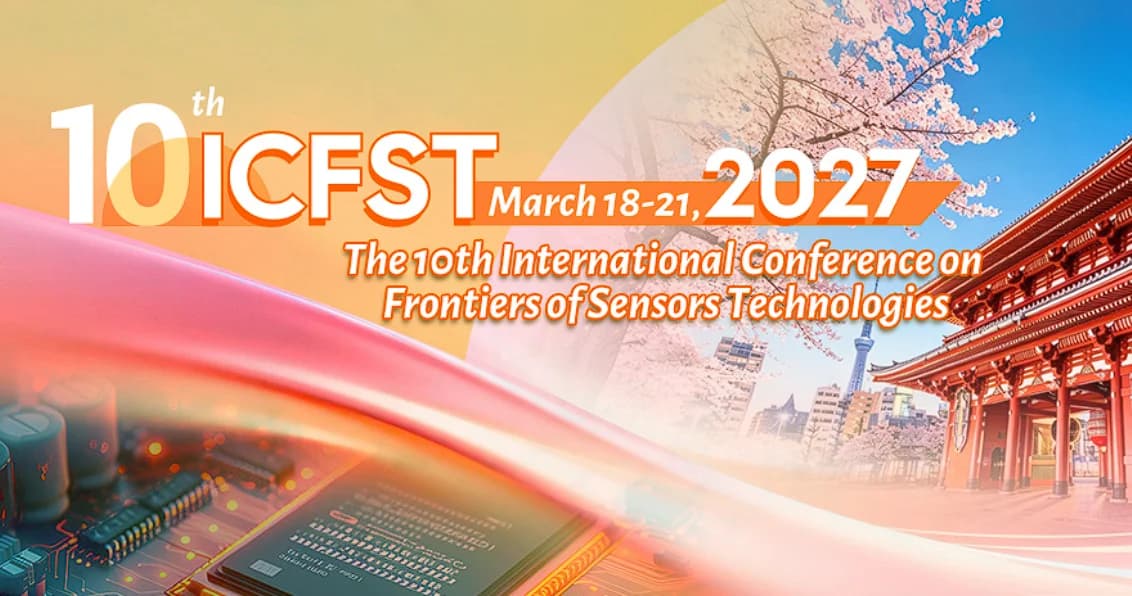
Tokyo in March, Japan
March is one of the most charming seasons to visit Tokyo, as the city gradually welcomes spring and the famous cherry blossoms begin to bloom. During this period, Tokyo is filled with a lively yet elegant atmosphere, with parks, riversides, university campuses, and historic districts offering beautiful seasonal scenery. The cherry blossom season not only highlights the natural beauty of Japan, but also reflects an important part of Japanese culture, where people gather to appreciate renewal, friendship, and shared moments.
Contact Us
Conference Secretary: Miss Carol Liu
Email: icfst_contact@163.com
Website: https://www.icfst.org/index.html