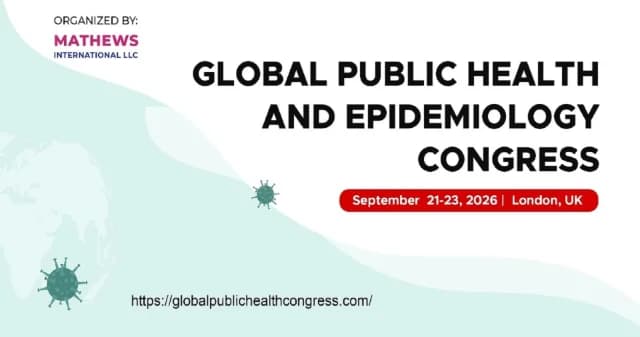
G-PHEC 2026 – Global Public Health and Epidemiology Congress will take place from September 21–23, 2026, offering a hybrid experience through its venue in London, United Kingdom, and an online participation mode. The congress will provide a global knowledge-sharing environment for examining research developments and contemporary priorities across public health and epidemiology.
The Public health congress will welcome contributions from epidemiologists, public health scientists, medical practitioners, healthcare coordinators, researchers, university faculty, health policy professionals, students, and representatives from governmental and non-governmental organizations. Their participation will support a broad exchange of ideas across scientific, clinical, social, and administrative perspectives.
Topics may include epidemiological investigation, disease occurrence, health monitoring, population risk assessment, preventive services, health education, intervention design, healthcare delivery, and policy evaluation. The Public health conference may also address outbreak detection, communicable diseases, long-term health conditions, vaccination, antimicrobial resistance, environmental exposures, occupational wellbeing, maternal care, pediatric health, mental wellness, nutrition, health disparities, and technology-enabled health services.
The Epidemiology conference will encourage participants to communicate research outcomes and explore innovative methods for addressing health concerns. Discussions may focus on the use of evidence in program development, healthcare planning, and decision-making at community, national, and international levels.
G-PHEC 2026 will support professional interaction through both physical and virtual participation. Attendees in London will have opportunities for direct engagement, while the online option will expand access to a wider international audience.
Through scientific exchange and collaborative learning, the congress aims to support progress in public health research and promote effective, inclusive, and sustainable approaches to improving population wellbeing.