

For most of the last hundred years, the future arrived through machines. Physics gave us flight and the atom. Electronics gave us the transistor. Computing gave us the internet. Each wave rearranged the world's economy, its militaries, and its balance of power.
The next wave will not come from a machine. It will come from a cell.
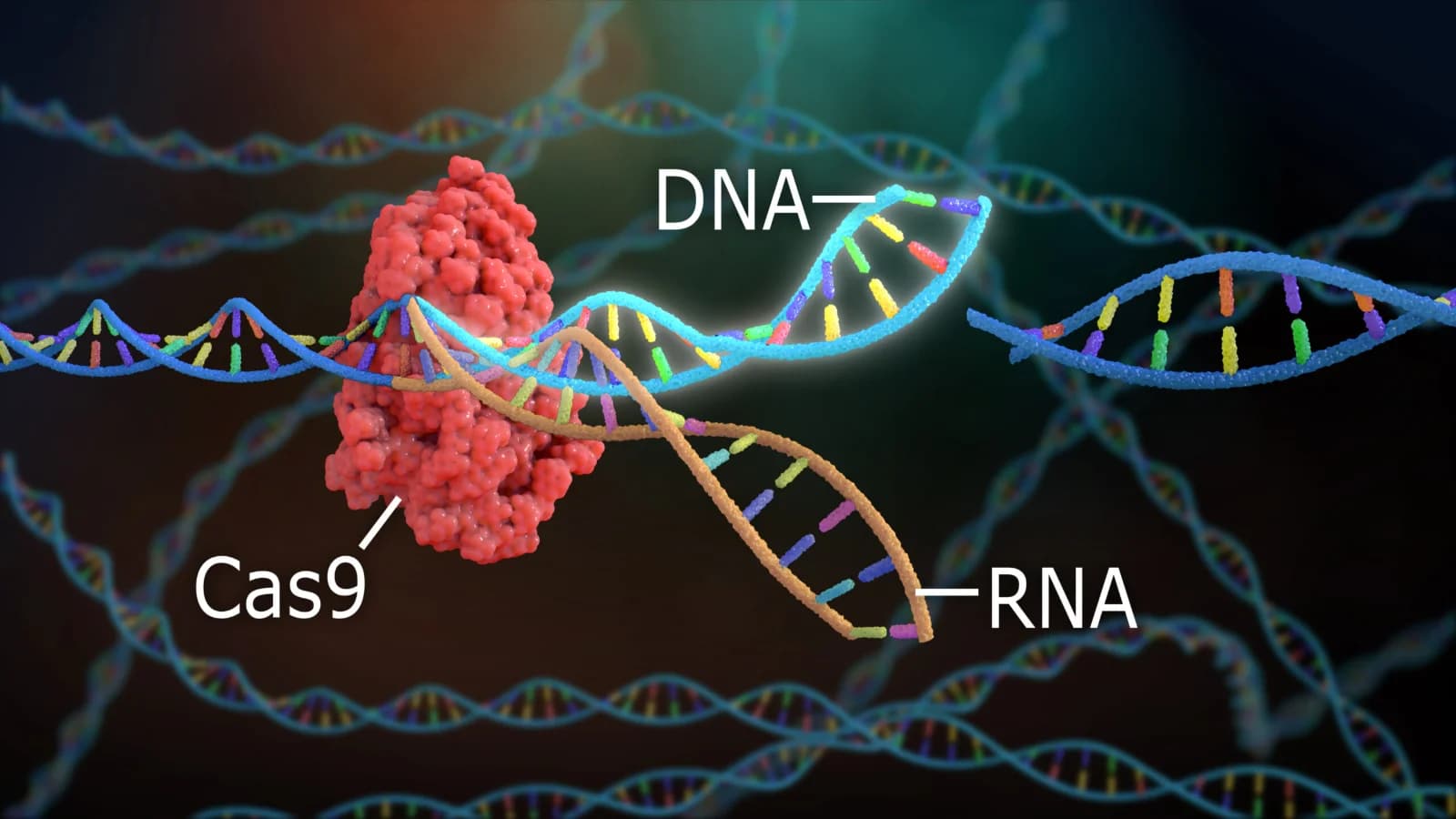
Biotechnology, synthetic biology, gene editing, and artificial intelligence are converging on a single, startling idea: that biology itself can be engineered the way software is engineered. Scientists no longer just study DNA — they read it like text, edit it like code, and, increasingly, write new sequences from scratch. Researchers who track this shift describe it in terms usually reserved for the biggest turning points in economic history — a transformation with the scale of the Industrial Revolution, moving at the speed of the digital one.
Call it what you like. The effect is the same: biology is stopping being only a science. It is becoming an industrial platform — one that will make medicines, materials, food, fuel, and, if handled carelessly, weapons.
Biology Learns to Speak Software
Not long ago, biotechnology meant laboratories, pharmaceutical pipelines, and years of trial and error. That world is being absorbed into a bigger one — a world of data, automation, DNA sequencing, and machine learning, where biological systems are treated less like mysteries to be studied and more like platforms to be designed.
DNA, in this frame, is code. A cell is a living system that can be read, edited, and rebuilt. Synthetic biology takes the analogy to its logical end, treating organisms not just as subjects of research but as manufacturing platforms — living factories that can be tuned to produce a desired outcome.
The scale of the opportunity is why so many governments and investors are paying attention. McKinsey's Global Institute has estimated that as much as 60 percent of the physical inputs to the global economy could, in principle, be produced using biological processes — and that the direct economic impact of bio-based innovation could run between $2 trillion and $4 trillion a year by the 2030s and into the 2040s. That is not a forecast about medicine alone. It is a forecast about manufacturing, energy, food, construction, and the material basis of the global economy.
Who's Winning the Bio Revolution
Every technological era eventually sorts nations into leaders, challengers, and bystanders. The bio economy is no different — and the map is being redrawn faster than most industries realize.
The United States remains the center of gravity. It holds the deepest pools of venture and public capital, the world's largest concentration of biotech clusters around Boston-Cambridge and the San Francisco Bay Area, and an FDA approval system still treated as the global gold standard. American labs and companies — from Moderna to Google DeepMind — have set the pace on both mRNA medicine and AI-driven biological research.
China is the most consequential challenger, and the one reshaping the competitive map fastest — more on that below.
The United Kingdom punches well above its economic weight, anchored by the Oxford-Cambridge-London "golden triangle," a century of genomics leadership dating back to the discovery of DNA's structure, and institutions like the Wellcome Trust and the Sanger Institute that still shape global genomic science.
Switzerland, home to Novartis and Roche and the dense biotech corridor around Basel, remains Europe's pharmaceutical powerhouse and consistently ranks among the world's most innovative economies overall.
Singapore has turned biotech into a deliberate national strategy, using sustained state investment to build itself into Asia's leading hub for clinical research, manufacturing, and biotech talent, and routinely appears at or near the top of global biotech-innovation scorecards alongside the US and Scandinavian countries.
Just behind this leading group, South Korea and India are moving up fast — Korea through advanced biomanufacturing and contract production, India through its scale in generics, vaccines, and a fast-growing base of biotech startups.
No single country will "win" the Bio Revolution outright. But the gap between the leaders and everyone else is where the next two decades of industrial power will be decided.
China's Long March From Factory Floor to Frontier Lab
Of all the shifts underway, China's is the one rewriting the global order most visibly.
For decades, Chinese pharma was defined by manufacturing and generics. In the early 2000s, by most industry estimates, well over 90 percent of medicines produced in China were generic copies, with original drug research playing a marginal role. China made medicine. It did not invent it.
That era is ending.
China is now the world's second-largest pharmaceutical market, growing at a pace that leaves more mature markets like the United States far behind. The shift wasn't accidental — it was engineered through regulatory reform, most notably China's 2017 accession to the International Council for Harmonisation, the body that sets the global rulebook for drug development and approval. Alignment with international standards, paired with a modernized domestic approval process, transformed the country's regulatory speed: applications that once took one to two years to process can now move in a matter of months.
Capital noticed immediately. China's publicly listed biopharma innovators went from a combined market value of roughly $3 billion in 2016 to well over $300 billion within five years, according to McKinsey's research on the sector — one of the fastest wealth-creation stories in the history of the industry.
This is why biotechnology has become a front line in geopolitical competition, not just a medical story. China is not simply trying to make more medicine. It is trying to lead in biopharmaceutical innovation, gene editing, and synthetic biology — and Washington has taken notice, with a congressionally chartered commission warning in 2025 that China is closing the innovation gap with the United States faster than expected.
The Machines Are Reading Biology Now
If China supplied the geopolitical urgency, artificial intelligence supplied the acceleration — and the last two years have made that acceleration impossible to ignore.
Drug discovery has always been slow, expensive, and prone to failure. AI is compressing that timeline in ways that would have sounded like science fiction a decade ago. Google DeepMind's AlphaFold turned protein-structure prediction — work that once consumed months or years of laboratory effort — into a task completed in hours or days. The achievement was significant enough that in 2024 the Nobel Prize in Chemistry was split between DeepMind's Demis Hassabis and John Jumper, for predicting the structure of virtually every protein known to science, and biochemist David Baker, for using similar AI methods to design entirely new proteins that had never existed in nature. It was one of the clearest signals yet that AI-driven biology has moved from a promising tool to a Nobel-recognized field in its own right.
That work is already moving from prediction to product. AlphaFold's successor, AlphaFold 3, extended the technology to model how proteins interact with DNA, RNA, and drug-like molecules — and DeepMind's sister company, Isomorphic Labs, has built a dedicated "drug design engine" on top of it, with programs now running across multiple disease areas and pharma partners including Eli Lilly and Novartis.
The acceleration goes beyond protein folding. In 2025, Google DeepMind introduced "Co-Scientist," a multi-agent AI system built to generate and stress-test its own scientific hypotheses, rather than simply retrieving information. Researchers at Imperial College London gave it an unsolved question about how dangerous bacteria acquire drug resistance — a puzzle their lab had been working on for roughly a decade. The AI system proposed the correct mechanism within two days, independently converging on a hypothesis the human researchers had not yet published. The same system has since been used to accelerate work on liver fibrosis, drug-repurposing, and cellular aging, in each case cutting analysis that once took months down to days.
And the discovery pipeline itself keeps getting faster. At MIT, researchers trained a machine-learning model on a small set of known compounds, then used it to screen a library of roughly 100 million molecules that had never been tested against bacteria. In days, not years, that search surfaced halicin — a compound with a structure unlike any existing antibiotic, effective against strains resistant to nearly everything else in the medicine cabinet.
The pattern is the same across the industry: AI does not replace the scientist, but it collapses the search space, letting researchers test more ideas, discard dead ends faster, and reach promising candidates sooner. Biology is becoming a data-rich discipline, and the organizations that can fuse biological expertise with computing power are pulling ahead of those that can't.
Rewriting What the World Is Made Of
The most radical implications of synthetic biology have little to do with medicine at all.
If DNA is code, then cells, plants, and microorganisms are programmable manufacturing systems — and that opens possibilities across nearly every physical industry. Researchers and companies are already using engineered biology to produce plant-based meat, biomaterials for construction and manufacturing, biological alternatives to plastic, and early-stage substitutes for aviation fuel. Bacteria can be coaxed into producing chemicals that once required petroleum. Yeast can be engineered to brew compounds that used to demand entire mining operations.
None of this is confined to laboratories or biotech conferences. It reaches manufacturers rethinking supply chains, investors hunting for the next materials revolution, food companies chasing alternative proteins, and governments trying to reduce dependence on fossil-based inputs. Biology, in other words, is becoming a production system — one that competes directly with a century of industrial chemistry.
The Same Tools That Heal Can Harm
Every technology that becomes cheaper and easier to use also becomes easier to misuse. Synthetic biology is no exception, and its dual-use problem is arguably more serious than anything the internet era produced.
In 2017, a small team of scientists in Alberta reconstructed horsepox — a virus considered extinct in nature and a close relative of smallpox — over several months, using little more than mail-order DNA and roughly $100,000. The point was scientific, aimed at improving vaccine research. But the demonstration itself raised an uncomfortable question that biosecurity experts have not stopped asking since: if a small university team could do this on a modest budget, what happens when the tools get cheaper still?
The ethical line has already been crossed once, in full public view. In 2018, a Chinese researcher named He Jiankui announced he had used CRISPR to edit the genomes of human embryos, resulting in the birth of twin girls — the first gene-edited humans on record. The move drew swift, near-universal condemnation from the global scientific community. He was sentenced to three years in prison in 2019, along with lesser sentences for two collaborators, in one of the starkest reminders yet that the technical capability to edit human life has outpaced the ethical and legal frameworks meant to govern it.
AI has since sharpened the risk further. In a widely discussed 2022 study, researchers took a drug-discovery model — designed to search for helpful molecules — and simply flipped its objective to search for harmful ones instead. In six hours, it generated roughly 40,000 candidate molecules, including structural analogues of some of the most lethal nerve agents known. The researchers hadn't built a new weapon. They had shown, in an afternoon, how trivially a tool built for medicine could be repointed toward the opposite purpose.
The lesson from the internet era is instructive, and slightly unsettling: cybersecurity became a serious discipline only after the internet had already scaled into a global system, by which point the vulnerabilities were everywhere. Biosecurity experts argue synthetic biology cannot afford to repeat that sequence — that oversight, safeguards, and screening need to be built in now, while the industry is still forming, not retrofitted after the fact.
The Jobs the Bio Revolution Is Creating
Every industrial revolution destroys some jobs and invents others. The Bio Revolution is no different, and its new job titles are starting to show up on hiring boards faster than most career advisors can keep track of.
The clearest growth is happening at the intersection of wet-lab biology and computing. Computational biologists and bioinformatics specialists — people who can move fluently between a lab bench and a codebase — are now among the most sought-after hires in the industry, as companies build the data pipelines that feed AI discovery platforms. Analysts tracking the sector project double-digit growth this decade for biological technicians and mid-to-high single-digit growth for biochemists, biophysicists, and microbiologists, driven largely by gene therapy, personalized medicine, and vaccine development.
A newer category is emerging alongside them: machine-learning engineers who specialize in biological data — training and fine-tuning the models behind protein design and drug discovery — and protein designers, a role that barely existed before AlphaFold and generative AI models made it possible to design functional proteins from scratch rather than simply describe the ones nature already built.
The manufacturing side is growing just as fast. Bioprocess and biomanufacturing engineers are needed to scale lab discoveries into factory-sized production — running the fermentation tanks and bioreactors that turn engineered microbes into medicines, materials, and food ingredients. Lab automation technicians keep the robotic systems running that now handle much of the repetitive screening work AI has made possible at scale.
The Bio Revolution's darker chapters are creating their own workforce, too. Biosecurity and biosafety specialists — tasked with screening synthesized DNA orders, auditing AI models for dual-use risk, and building the safeguards the industry openly admits it under-built in its early years — are moving from a niche compliance function to a genuine growth field, as regulators and companies alike scramble to build oversight structures before, not after, the next incident. Regulatory affairs professionals who understand novel modalities — cell and gene therapies, mRNA platforms, AI-designed biologics — are similarly in short supply relative to demand, because the rulebooks for these technologies are still being written in real time.
None of these roles require choosing between biology and technology. The professionals most in demand are the ones who speak both languages — which is precisely the skill set the next generation of universities, bootcamps, and corporate retraining programs are scrambling to teach.
Why This Matters for Industry Events Readers
No single sector will build the Bio Revolution alone. It sits at the intersection of healthcare, artificial intelligence, pharmaceuticals, agriculture, advanced manufacturing, climate technology, defense, and regulation — which is exactly why conferences, summits, and trade events matter so much right now. This is a technology moving too fast, and touching too many industries, for any one organization to track from the inside.
The breakthroughs ahead won't come only from scientists in isolated laboratories. They'll come from the collisions between biotech founders, pharmaceutical giants, AI researchers, regulators, investors, manufacturers, and food-system innovators — the kind of collisions that happen on a conference floor months or years before they show up in a headline.
For that reason, the events worth attending in this space tend to bring together four conversations at once:
Science and commercialization — how lab discoveries become real products, therapies, materials, and manufacturing processes. AI and automation — how machine learning and lab robotics are compressing research timelines. Investment and market growth — where capital is actually flowing, across biotech, synthetic biology, precision medicine, and bio-based materials. And ethics, safety, and regulation — how the industry earns public trust while managing the risks of gene editing and dual-use research.
For Industry Events readers specifically, the practical takeaway cuts across job titles. Healthcare professionals will need fluency in AI-enabled discovery. Manufacturers will need to track biomaterials before their competitors do. Food and agriculture leaders will need to understand synthetic biology's push into alternative proteins. Investors will need the judgment to separate credible science from hype. Policymakers will need to balance innovation against public safety — a balance the industry has already gotten badly wrong at least twice.
The professionals who benefit most from this shift will be the ones who show up early — before the room is crowded, before the vocabulary is common knowledge, and before the opportunity is obvious to everyone else. That has always been the case for major technology shifts, and there is little reason to think biology will be the exception.
The Big Shift
The Bio Revolution has a real chance of becoming one of the defining economic stories of this century. It could accelerate cancer treatment, strengthen food security, build genuinely sustainable materials, and loosen the world's dependence on fossil-based inputs.
It also raises questions the world has not fully answered: about safety, about ethics, about who gets to set the rules, and about what happens when the power to rewrite life becomes cheap enough for almost anyone to hold.
The countries and companies that lead this field will not just shape the future of medicine. They will shape the next era of industrial power — much as the countries that led computing and the internet shaped the last one.
The internet changed how the world moves information. Biology is about to change how the world makes things, heals itself, grows its food, and defends against its oldest enemies.
That is why the Bio Revolution deserves attention now — while it is still early enough to matter.
Sources referenced: McKinsey Global Institute, "The Bio Revolution" (2020) and "The dawn of China biopharma innovation"; the Nobel Prize in Chemistry 2024 press materials (Hassabis, Jumper, Baker); Google DeepMind (AlphaFold, AlphaFold 3, and the Co-Scientist multi-agent system, published in Nature, 2026); Isomorphic Labs; reporting on the Imperial College London antimicrobial-resistance discovery (Live Science, Futura-Sciences, 2025); MIT News on the discovery of halicin; Science/AAAS and NPR reporting on the 2017 synthetic horsepox reconstruction; CBS News, NPR, and MIT Technology Review reporting on the sentencing of He Jiankui (2019); Scientific American and OECD.AI coverage of the 2022 AI drug-repurposing study; the U.S. National Security Commission on Emerging Biotechnology's 2025 final report; Research.com biotechnology career and workforce data (2026).