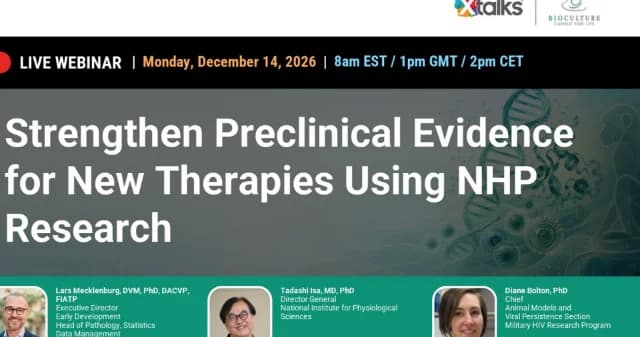
This webinar is the second in a four-part series from Bioculture and EARA examining the science, regulation and responsibility behind the use of non-human primates (NHPs) in biomedical research. The series explores where NHPs remain essential, where new approach methodologies (NAMs) are replacing or complementing animal research and what a rigorous, transparent path forward looks like for the field, supporting scientific progress and the principles of the 3Rs (Replacement, Reduction and Refinement).
Developing new treatments for serious and life-threatening diseases requires a detailed understanding of disease mechanisms and robust evidence to guide the translation of scientific discoveries into potential therapies. For complex conditions affecting the nervous system, immune system and brain, non-human primate (NHP) models can provide valuable insights into human biology that are difficult to obtain using other available approaches alone. This webinar explores how NHP research advances scientific discovery, improves understanding of disease mechanisms and supports the investigation of promising therapeutic strategies.
The discussion will examine how decades of research into primate anatomy, physiology and behaviour have established a foundation for investigating complex human diseases and developing novel interventions. Case studies will highlight research into functional recovery following spinal cord injuries, genome-edited macaque models for studying neuropsychiatric disorders and preclinical investigations supporting the development of treatments for conditions such as spinal muscular atrophy, Alzheimer’s disease, Parkinson’s disease and Huntington’s disease.
Beyond neuroscience, the webinar will examine the contributions of NHP models to infectious disease research, particularly their role in evaluating vaccine strategies to reduce infection risk in humans and investigating monoclonal antibodies for HIV-1 prophylaxis.
Attendees will gain a clearer understanding of how NHP research contributes to therapeutic discovery and preclinical development, where these models provide distinctive scientific value and how rigorous, transparent and responsible research can help translate preclinical findings into potential patient benefits.
Register for this webinar to learn how NHP research supports the development of potential treatments for serious diseases and informs responsible preclinical and translational research.
Who Should Attend
This session will appeal to:
Preclinical Scientists and Translational Research Leads
Toxicologists and Safety Pharmacologists
R&D leaders, Investors and Business Development Leads assessing preclinical model strategy at pharma, biotech and CROs
Regulatory Affairs and Drug Development professionals
Academic Researchers working on translational and preclinical models
Policy, Bioethics and Science-Communication professionals
Professionals involved in animal welfare, research governance and ethical review
Register free on Xtalks: https://xtalks.com/webinars/strengthen-preclinical-evidence-for-new-therapies-using-nhp-research/