

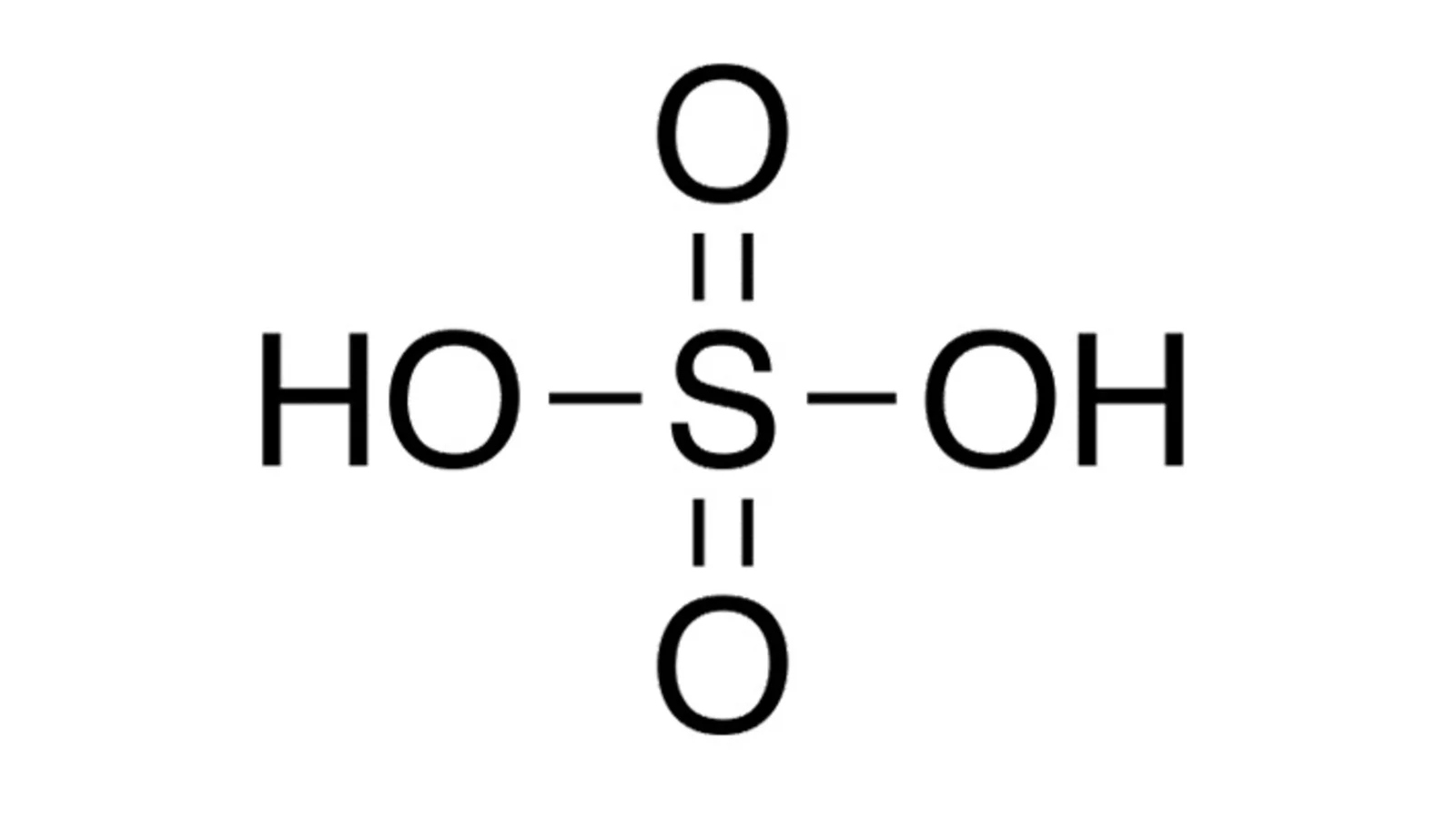
Sulfuric acid rarely appears in headlines. It should.
It is one of the quiet industrial materials holding the modern economy together. It helps make phosphate fertiliser. It leaches copper from ore. It is used in nickel processing, lead-acid batteries, petroleum refining, steel treatment, water systems, semiconductors and battery recycling. Australia’s National Pollutant Inventory describes sulfuric acid as the world’s largest-volume industrial chemical, while the U.S. Geological Survey says sulfuric acid consumption has long been regarded as one of the best indicators of a nation’s industrial development.
That makes sulfuric acid more than a chemical.
When it is cheap and available, the system looks normal. Farmers receive phosphate fertiliser. Copper mines keep producing cathode. Nickel plants keep feeding the battery supply chain. Water utilities secure chemicals for treatment. Refineries, smelters and factories continue operating.
When sulfur or sulfuric acid tightens, the hidden map appears.
Energy affects sulfur.
Sulfur affects sulfuric acid.
Sulfuric acid affects fertiliser, metals, batteries and water.
Those industries affect food security, electrification, transport, semiconductors and national resilience.
This is the kind of connection executives cannot afford to miss.
Where sulfuric acid really comes from
Sulfuric acid is made largely from sulfur, and sulfur is mainly recovered from fossil-fuel processing.
When crude oil is refined and natural gas is processed, sulfur compounds have to be removed to meet fuel standards and reduce pollution. That recovered sulfur is then converted into sulfuric acid. USGS identifies petroleum refining and natural gas processing as the largest sources of elemental sulfur, with smaller quantities of sulfuric acid recovered from nonferrous metal smelters and coking operations.
The chemistry is straightforward in principle.
Sulfur is burned to make sulfur dioxide. Sulfur dioxide is converted into sulfur trioxide, usually over a catalyst. Sulfur trioxide is then absorbed to produce sulfuric acid. The EPA describes sulfuric acid production from elemental sulfur combustion, sulfur-containing wastes and by-product streams from nonferrous metals such as lead, zinc, copper, molybdenum and gold.
The strategic consequence is less obvious.
A by-product of oil and gas processing becomes a foundation material for fertiliser, copper, nickel, water treatment and clean-energy supply chains.
That is the first dot.
Oil and gas → sulfur → sulfuric acid → fertiliser, metals, batteries and water systems.
The food-security link: why acid matters to fertiliser
The most important connection is agriculture.
Phosphate rock contains phosphorus, an essential plant nutrient, but untreated phosphate rock is not soluble enough for most modern fertiliser use. Sulfuric acid is used to treat phosphate rock and produce phosphoric acid, which becomes the basis for phosphate fertilisers such as monoammonium phosphate and diammonium phosphate. USGS states that treating phosphate rock with sulfuric acid makes phosphoric acid, the basic material for producing most phosphatic fertilisers.
That means sulfuric acid sits inside the food system.
Farmers are not buying sulfuric acid for this purpose. They are buying fertiliser made possible by sulfuric acid. But the dependency is real.
The chain is direct:
Sulfuric acid → phosphoric acid → phosphate fertiliser → crop yields → food security.
USGS also notes that sulfur is important to agriculture both as a plant nutrient and because of its role in processing phosphate rock into fertiliser. Nearly 60% of sulfur consumption is used in phosphate fertiliser production, with additional sulfur used in other agricultural applications.
This is why sulfur cannot be treated as a minor industrial input.
A sulfur shock can become a fertiliser shock.
A fertiliser shock can become a food-price shock.
A food-price shock can become a political and social-stability shock.
The mining link: copper, nickel and the clean-energy buildout
Sulfuric acid is also central to mining.
In copper, sulfuric acid is used to leach copper from oxide ores. The dissolved copper can then be recovered through solvent extraction and electrowinning, known as SX-EW. Geoscience Australia describes this process as ore being set out on leach pads and dissolved by a sulfuric acid solution to leach out the copper.
That matters because copper is the metal of electrification. Power grids, transmission lines, data centres, electric vehicles, charging networks and renewable-energy systems all require copper.
Reuters reported in April 2026 that sulfuric acid is a key input for copper miners using solvent-extraction technology on oxide ores, and that about one-fifth of global primary refined copper production comes from SX-EW operations, according to the International Copper Study Group.
Nickel shows the same dependency from a different angle.
High-pressure acid leach, or HPAL, uses sulfuric acid to process laterite nickel ores. HPAL is important because laterite resources are a major source of nickel for battery-material supply chains. Reuters reported that Indonesian nickel producers using HPAL were exposed to rising sulfur prices, and that a new Indonesian ore-pricing formula was welcomed by smelters partly because it helped protect HPAL operators from losses amid higher sulfur costs.
This is the clean-technology paradox.
The world wants more batteries, EVs, grids and renewable infrastructure. But some of the metals needed for that transition depend on acid-intensive processing routes, and sulfur supply is still heavily linked to oil and gas.
Clean energy is not built only from solar panels and batteries.
It is built from chemicals, metals, ports, refineries, smelters, water, power, finance and logistics.
Sulfuric acid is one of the hidden materials in that chain.
The current disruption: Gulf risk, China and the acid crunch
Recent market stress has shown how fast the connections can tighten.
Reuters reported in April 2026 that disruption from the Iran war trapped sulfur supply from the Gulf after the Strait of Hormuz closed on February 28. The report said the region accounts for about a quarter of global sulfur production, according to USGS, and that the fallout was spreading into copper and nickel supply chains because sulfuric acid is needed for copper SX-EW and nickel HPAL.
Chile then became a visible example.
Reuters reported that Chile, the world’s top copper producer, faced a sulfuric acid supply crunch after Chinese acid exports dried up. China had supplied 37% of Chile’s sulfuric acid imports, and the shortage put at risk around 1.1 million tonnes of annual leached copper output.
Indonesia showed the nickel side of the same problem. Reuters reported that Gulf disruption squeezed Indonesian nickel makers because HPAL plants rely on sulfuric acid, while Middle Eastern sulfur supply had become harder to access.
This is the real lesson.
A geopolitical event in the Gulf does not stop at oil prices.
It can hit sulfur supply.
That can hit sulfuric acid.
That can hit copper and nickel.
That can hit EVs, batteries, grids, data centres, industrial equipment and clean-energy infrastructure.
Executives who look only at headline commodities miss the hidden chemical chokepoints underneath them.
China is not just a consumer. It is a swing point.
China matters because it is a major industrial producer, a clean-technology powerhouse and a key node in sulfuric acid trade.
Copper smelters can produce sulfuric acid as a by-product. That means acid prices can affect smelter economics. Reuters reported in February 2026 that surging sulfuric acid prices delivered about $1.5 billion in extra revenue to Chinese smelters in 2025, even as traditional copper-smelting margins were under pressure.
That changes how executives should think about smelting.
A copper smelter is not only exposed to copper concentrate, treatment charges and refined metal demand. It can also be exposed to acid demand from fertiliser, mining and battery-material supply chains.
China’s export choices matter as well. Reuters reported that China had halted sulfuric acid exports to Chile in March 2026 and was expected to restrict exports further to protect domestic supply during the wider sulfur-market disruption.
That is how an industrial chemical becomes strategic.
If too much supply depends on one exporter, one region or one shipping route, the chemical stops being a background input and becomes a boardroom risk.
Semiconductors, batteries and water: the wider industrial map
Sulfuric acid’s importance extends beyond fertiliser and mining.
The EPA identifies sulfuric acid as a water-treatment chemical used for pH adjustment and ion-exchange resin regeneration. It also describes sulfuric acid as a precursor for chemicals used in water treatment, including aluminium sulfate, ferric sulfate, ferrous sulfate, phosphoric acid and fluorosilicic acid.
In semiconductors, sulfuric acid appears in wet chemical etching and cleaning. OSHA lists sulfuric acid among wet chemical etchants used in semiconductor manufacturing, and Tokyo Electron describes sulfuric peroxide mixture — sulfuric acid and hydrogen peroxide — as a chemistry used in wafer cleaning and wet etch processes.
In batteries, sulfuric acid is best known as the electrolyte in lead-acid batteries, but it also appears in parts of the lithium-ion battery recycling discussion. A 2025 Nature Chemical Engineering paper described a recycling approach in which lithium sulfate solution is converted into lithium hydroxide and sulfuric acid, creating a pathway to regenerate reagents inside a recycling loop.
A separate 2025 review of lithium-ion battery recycling noted that hydrometallurgical processes commonly use strong inorganic acids, including sulfuric acid, to dissolve end-of-life battery materials and recover metals.
These are not side stories.
They show why sulfuric acid sits across the modern industrial stack:
water treatment → public health and utilities
semiconductors → electronics and AI infrastructure
battery recycling → circular clean technology
lead-acid batteries → vehicles, backup power and industrial systems
metals processing → grids, EVs and data centres
The same chemical appears in industries that rarely sit in the same meeting room.
The technology shift: smarter acid, cleaner processing, tighter loops
The next phase of sulfuric acid is not only about supply volume. It is about smarter use.
Three technology shifts matter.
The first is process efficiency. Mining, fertiliser and chemical producers will need to reduce acid losses, improve recovery and optimise consumption. In copper and nickel, that means better leach control, ore characterisation, acid balance, process modelling and water management.
The second is industrial circularity. Spent sulfuric acid can be reclaimed from petroleum refining, steel pickling and chemical processing, according to the EPA. More recovery and reuse can reduce dependence on fresh supply, though feasibility depends on purity, contaminants, transport cost and local regulation.
The third is battery and metals recycling. Hydrometallurgy can recover lithium, cobalt, nickel, manganese and other materials from spent batteries, often using acid leaching. The opportunity is to design processes that recover critical metals while reducing reagent consumption, secondary waste and water stress.
This is where sulfuric acid becomes a technology story.
Not because the molecule is new.
Because the systems around it are changing.
AI can optimise leaching conditions.
Sensors can monitor acid concentration and impurity loads.
Digital twins can model plant performance before operators adjust a real process.
Recycling technologies can regenerate reagents.
Logistics software can manage acid inventory against port, shipping and geopolitical risk.
The chemical is old.
The operating environment is becoming much more advanced.
The clean-technology paradox executives need to understand
Sulfuric acid exposes one of the most important truths in the clean-energy transition.
Some of the industries needed to decarbonise the world still depend on supply chains created by the fossil-fuel economy.
Sulfur is mainly recovered from oil refining and gas processing. Sulfuric acid helps produce the phosphate fertiliser that supports food systems. It helps leach copper and process nickel, both central to electrification. It is used in battery systems, water treatment, semiconductors and industrial chemistry.
That creates a difficult question.
If oil and gas systems change over time, where does sulfur come from?
If sulfur supply tightens, which sector gets priority — fertiliser, copper, nickel, water treatment or industrial chemicals?
If China restricts exports or the Gulf is disrupted, which countries have enough regional capacity, storage and alternative supply?
If mining demand rises because of clean energy, can acid supply keep up without increasing exposure to fossil-fuel chokepoints?
These are not theoretical questions. The Gulf disruption, Chilean copper risk and Indonesian nickel exposure show that the pressure is already visible.
What executives should watch
Executives should watch sulfuric acid as a systems indicator, not a niche chemical.
First, sulfur supply from oil and gas. If refining or gas-processing patterns change, sulfur availability changes with them.
Second, fertiliser demand. Agriculture will remain a priority because phosphate fertiliser depends on sulfuric acid and food security is politically sensitive.
Third, copper and nickel processing. Clean-energy metals are partly exposed to acid-intensive routes such as copper SX-EW and nickel HPAL.
Fourth, China’s export decisions. China’s domestic needs and export controls can affect acid availability far beyond its borders.
Fifth, Gulf and shipping chokepoints. Sulfur moves through physical trade routes. Energy disruption can become chemical disruption.
Sixth, water and semiconductor demand. Water utilities and chipmakers both depend on reliable chemical supply, though their purity requirements and supply chains differ.
Seventh, recycling and recovery technology. Better acid recovery, reagent regeneration and battery recycling can reduce exposure to fresh raw-material supply.
The practical question is not only, “Can we buy acid?”
It is:
Where does our acid come from? What else competes for it? Which routes move it? Which country controls the supply? What happens if fertiliser gets priority?
Where the opportunity sits
The opportunity is not simply to produce more sulfuric acid.
It is to build more resilient industrial systems around it.
That means regional acid production near mining and fertiliser hubs. It means stronger recovery from smelters and industrial waste streams. It means better storage and logistics planning. It means smarter leaching technologies that reduce waste. It means battery-recycling systems that regenerate reagents. It means closer coordination between energy, fertiliser, mining, water, logistics and clean-technology sectors.
For governments, sulfuric acid belongs in the conversation about industrial resilience.
For mining companies, it belongs in project risk analysis.
For fertiliser producers, it belongs in food-security planning.
For battery and clean-technology companies, it belongs in supply-chain due diligence.
For investors, it belongs in the hidden-input map behind copper, nickel, agriculture and electrification.
Follow the events where these industries connect
Sulfuric acid shows why industry intelligence can no longer stay inside one sector.
An energy event may reveal the future of sulfur supply. A mining conference may expose pressure on copper and nickel processing. A fertiliser forum may show early warning signs for food security. A water-infrastructure summit may point to chemical demand that rarely appears in headline markets. A battery-materials event may reveal where acid-intensive processing and recycling are heading next.
These connections are where risk appears early — and where opportunity often begins.
IndustryEvents.com helps professionals, executives and organisations discover the global events, conferences, exhibitions and insights where these industries meet. From energy, mining and fertiliser to water, agriculture, clean technology, batteries and logistics, the platform follows the gatherings that help decision-makers connect the dots before the market forces them to.
Explore upcoming industry events and insights at IndustryEvents.com.
The bigger message
Sulfuric acid is not just a chemical.
It is a bridge between fossil fuels and food production, between mining and electrification, between industrial chemistry and clean technology, between water systems and public health, between geopolitics and everyday prices.
The modern economy depends on materials most people never see.
Sulfuric acid is one of them.
When it flows, the system looks normal.
When it tightens, the world is reminded that food security, clean energy and industrial growth are not separate stories.
They are connected by chemistry.