

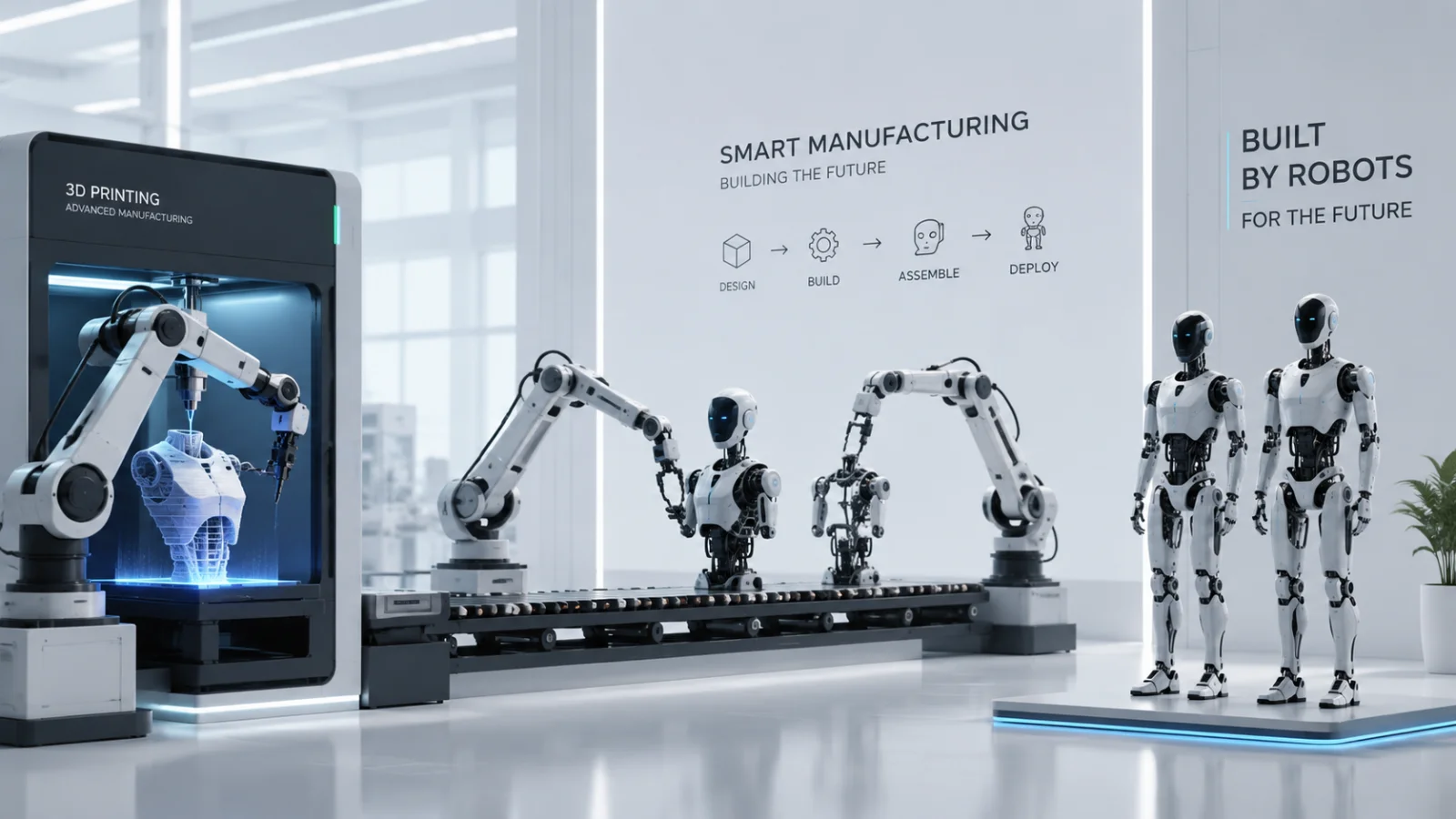
For years, 3D printing was sold as either the future of everything or dismissed as a novelty for printing plastic toys and accessories.
Print a house. Print a car. Print a rocket. Print microcircuits
The promise was enormous. The reality was more complicated.
3D printing, also known as additive manufacturing, is not replacing all manufacturing. It is becoming a serious option where the problem is specific enough: complex parts, lighter structures, customized medical devices, spare parts, advanced materials, faster prototyping, digital inventories and selected construction applications.
The big shift is this: the industry is moving from “Can we print it?” to “Can we produce it reliably?”
That is a much more mature question.
It means the future of 3D printing will not be decided by machines alone. It will be decided by materials, software, sensors, robotics, quality systems, digital twins, supply chains, business models and people with the right skills.
In other words, 3D printing is becoming part of a bigger advanced manufacturing story.
1. The Big Shift
The first phase of 3D printing was about possibility.
Could a printer make a complex shape? Could it produce a prototype faster than traditional methods? Could a designer test an idea without waiting weeks for tooling?
That phase mattered. It helped engineers move faster and gave designers more freedom.
But the next phase is different.
The real question is whether 3D printing can produce reliable, repeatable, high-performance parts in the real world. That means parts that can survive heat, vibration, pressure, chemicals, fatigue, moisture, regulation and daily use.
This is where the industry is maturing. The strongest story is no longer “everything will be printed.” The stronger story is additive manufacturing is becoming a serious production tool where design, material, economics and quality control line up.
According to Wohlers Report 2026, global additive manufacturing revenues reached an estimated US$24.2 billion in 2025. That suggests the industry is still growing, but the more important signal is maturity: customers are increasingly buying capability, services and production outcomes, not just machines.
2. Advanced Materials: The Breakthrough Moving 3D Printing Forward
3D printing has been around for decades, so the question is not simply “why now?”
The better question is: why is it becoming more relevant now?
One answer is materials.
Advanced materials are becoming strategically important across aerospace, defense, medical devices, electronics, energy, construction and high-performance manufacturing. These sectors do not just need shapes. They need strength, heat resistance, low weight, biocompatibility, conductivity, corrosion resistance, durability or sustainability.
That changes the value of 3D printing.
When the material matters, additive manufacturing becomes more interesting. Instead of cutting away material from a block, it builds parts layer by layer. That can reduce waste, enable internal channels, support complex geometries and make small-batch or customized production more practical.
Titanium, nickel alloys, high-performance polymers, ceramics, composites and printable construction materials all point to a bigger shift: manufacturing is becoming more specialized, more digital and more materials-led.
Supply chains are also part of the story. Companies and governments want more resilience. They want to reduce dependency on long, fragile supply chains for critical parts. Additive manufacturing cannot solve supply chains by itself, but it can help in selected areas: spare parts, tooling, localized production, repair, rapid redesign and digital inventory.
The key is to stay disciplined.
3D printing is not useful just because it is futuristic. It is useful when the manufacturing problem fits.
3. 7 Technology Trends Redefining Additive Manufacturing
Industrial 3D printing is not one technology. It is a family of technologies.
A desktop plastic printer, a metal powder bed fusion system, a directed energy deposition machine, a binder jetting platform, a concrete printing robot and a material jetting system are all different tools for different jobs.
The next phase of 3D printing will be shaped by seven technology trends.
First, metal powder bed fusion remains one of the important industrial processes for complex metal parts. It is especially relevant where performance, light weight and geometry matter.
Second, directed energy deposition is gaining attention for large metal parts, repair and rebuilding. This matters because not every valuable part needs to be printed from scratch. Sometimes the opportunity is to repair, modify or add material to an existing component.
Third, binder jetting remains a scale-up technology to watch. It has potential for higher-throughput production, but the challenge is not just printing faster. Powder quality, binder chemistry, sintering, shrinkage and final part performance all matter.
Fourth, multi-material printing points to a more futuristic direction. The future is not only about printing complex shapes, but printing complex function — combining materials, properties or behaviors in a single part.
Fifth, sensors, monitoring and AI are becoming part of the machine. For serious production, users need to detect defects, monitor build conditions and predict quality. That turns 3D printing into a data-rich manufacturing process.
Sixth, post-processing and inspection are becoming just as important as printing. Many printed parts still need heat treatment, support removal, machining, finishing, testing and non-destructive inspection.
Seventh, construction-scale 3D printing is moving from demonstration to early housing and building projects. The most credible opportunity is not “printing a whole house” in one step. It is automating parts of construction, especially wall systems and building components.
Together, these trends show where the industry is heading.
The future of 3D printing is not one magic machine. It is a production stack: materials, machines, sensors, software, automation, inspection and quality systems working together.
4. Materials Watch
The next phase of 3D printing will not be won by machines alone. It will be shaped by the materials those machines can handle reliably.
That is why advanced materials matter.
Metals, high-performance polymers, ceramics, composites and printable construction materials each open different use cases — from lighter aerospace parts and medical devices to stronger tooling, heat-resistant components and faster wall systems in housing.
But the important point is not “we can print anything.”
The useful story is more disciplined: 3D printing becomes valuable when the material, design, process and proof of quality all work together.
Metals matter where strength, weight and heat resistance are critical. Engineering polymers matter where parts need to be light, durable or chemically resistant. Ceramics and composites point to more specialized futures, especially in energy, electronics, defense, healthcare and harsh environments.
Printable concrete adds another frontier, but mainly for wall systems and construction components — not entire houses from start to finish.
So, the materials race is really a credibility race.
Advanced metal alloys — for aerospace, defense, turbines, medical implants, and high-strength parts. New research is even moving toward “alloys-on-demand,” where metals can be mixed during printing.
Carbon-fibre and polymer composites — lightweight but strong materials for cars, aircraft parts, tooling, construction components, and industrial equipment. ORNL is already working on large-scale composite additive manufacturing for transport, aerospace, and industrial use.
Ceramics and ceramic composites — useful for extreme heat, corrosion, reactors, electronics, medical parts, and energy systems. These are hard to manufacture traditionally, so 3D printing could open new design options.
Bio-materials and bio-inks — used in medical research, tissue engineering, implants, wound care, and drug delivery. MIT recently showed how 3D-printed micro-nozzle devices could help produce layered drug-delivery particles and self-healing materials.
Smart materials / 4D printing materials — materials that change shape, respond to heat, light, water, or electricity. These could be used in soft robotics, medical devices, aerospace parts, and adaptive structures.
Recycled plastics, metals, glass, and composites — important for sustainable manufacturing, circular economy, and reducing waste in production. Recent reviews show growing interest in using recycled polymers, metals, composites, and glass/ceramics in additive manufacturing.
Conductive inks and printed electronics — for sensors, wearables, smart packaging, medical devices, and robotics. This area is moving fast because 3D printing can combine structure and electronics in one part.
Construction materials — printable concrete, geopolymer mixes, clay, earth-based materials, and recycled building materials for housing, infrastructure, and disaster recovery. This area is promising, but still depends heavily on regulation, material testing, cost, and local building codes.
The winning materials will not just be printable. They will be testable, repeatable, certifiable and useful in the real world.
5. The AI Effect
AI is becoming important in 3D printing because additive manufacturing creates a lot of data.
Machines, sensors, materials, images, temperatures, melt pools, defects, inspection results and finished parts all produce information. Used well, that data can help manufacturers understand what is happening during the build.
AI can help spot defects earlier.
It can help optimize print settings.
It can help predict part quality.
It can help engineers understand how materials behave.
It can reduce trial-and-error.
That matters because one of the biggest barriers to industrial 3D printing is trust. Companies need confidence that a printed part will perform the same way again and again.
Digital twins sit inside this story.
A digital twin is a virtual model of the printer, process, part or production system that can be updated with real machine and sensor data. In additive manufacturing, that could help teams monitor a build, compare what is happening against what was expected, predict defects and improve process settings over time.
The regional picture is uneven.
North America is strong in aerospace, defense, software, standards and research. Europe, especially Germany, remains important because of its industrial manufacturing base and engineering depth. China is a major force in additive manufacturing scale, industrial adoption and state-backed advanced manufacturing. Wider Asia-Pacific is also important, with Japan, South Korea, Singapore and Australia contributing through precision manufacturing, electronics, materials research, defense and medical applications.
But the reality check is simple.
AI and digital twins are not shortcuts around engineering proof. They depend on high-quality data, reliable sensors, validated models and real-world testing.
The real AI opportunity is practical: making 3D printing more predictable, more measurable and more production ready.
6. Smart Factories and the Industry 4.0 Advantage
3D printing should not be seen as a standalone technology. Its bigger role is inside the smart factory.
In an Industry 4.0 environment, additive manufacturing connects digital design, simulation, automation, robotics, materials, quality systems and supply-chain strategy.
A part can begin as a digital model, be tested through simulation, printed using advanced materials, monitored by sensors, inspected through metrology and improved using production data.
That connects 3D printing directly to digital twins and simulation. Before a part is printed, engineers may simulate how it will behave. During the print, sensors may monitor the machine and material. After the print, inspection systems can compare the finished part against the design.
It also connects to industrial automation, controls and robotics.
Robots and cobots can support machine tending, material handling, inspection, finishing and hybrid manufacturing workflows. In construction, automation can support printed wall systems. In factories, automation can help move additive manufacturing from isolated machines into repeatable production cells.
Precision engineering and metrology are just as important. The more critical the part, the more important measurement becomes. Additive manufacturing needs inspection, testing, calibration and quality systems so printed parts can be trusted.
There is also a connection to semiconductors, electronics and microfabrication. As manufacturing becomes more digital and precise, 3D printing may support tooling, fixtures, thermal components, packaging, sensors, micro-scale structures and specialist electronics applications.
Finally, additive manufacturing connects directly to supply-chain and reshoring strategy.
It can support localized production, digital inventories, spare parts, shorter lead times and reduced dependence on long supply chains — but only when the part, material, cost and qualification case make sense.
The bigger insight is this: 3D printing is not the whole smart factory.
It is one powerful node inside a wider advanced manufacturing system.
7. Where 3D Printing Is Creating Real Value
The strongest use cases for 3D printing are not random.
They usually appear where traditional manufacturing is slow, expensive, wasteful or limited by geometry.
In aerospace and space, additive manufacturing is useful because parts often need to be lightweight, complex and high performance. It can reduce part count, enable internal channels and make shapes that are difficult to produce with conventional methods.
In healthcare, the value is personalization. 3D printing can support patient-specific anatomical models, surgical guides, dental applications and selected implants. Cranio-maxillofacial surgery is a strong example because every patient’s anatomy is different, and printed guides or models can help planning and treatment.
But medical 3D printing also needs discipline. It requires quality systems, sterilization, biocompatibility, documentation and regulatory approval.
In transport and heavy industry, the opportunity is spare parts. Instead of holding every physical part in a warehouse, companies can keep digital inventories and print selected parts when needed.
In construction, 3D printing is emerging as a way to automate parts of the build, especially wall systems. But it does not replace the entire housing process. Foundations, roofs, services, interiors, approvals and building codes still matter.
In defense, the value is readiness. Additive manufacturing can support repair, spare parts, local production and faster response — but only where the part can be qualified and trusted.
The pattern is clear: 3D printing works best when it solves a specific problem — complexity, customization, lead time, material use, part consolidation or supply-chain availability.
It is less convincing when it is used just because it sounds futuristic.
8. What’s Holding Adoption Back
The biggest barrier to 3D printing is not imagination.
It is trust.
For industrial adoption, companies need to know that a printed part will perform reliably — not just once, but again and again across machines, materials, operators and production sites.
That is difficult because additive manufacturing is sensitive to many variables: powder quality, machine settings, temperature, geometry, build orientation, post-processing and inspection.
Cost is another barrier.
3D printing can be valuable when it reduces tooling, lead times, waste, part count or inventory. But it is not automatically cheaper than conventional manufacturing, especially for simple high-volume parts.
Qualification also slows adoption.
Aerospace, medical, defense and construction applications need proof that printed parts or structures meet strict performance and safety requirements. That means testing, standards, documentation and repeatable processes.
Construction shows the same pattern. 3D printing can accelerate wall systems, but housing still depends on foundations, roofing, utilities, approvals, interiors and building codes.
So the barrier to scale is not whether 3D printing can make impressive things.
It can.
The harder question is whether it can make them reliably, affordably and safely enough for mainstream production.
9. Signals to Watch Next
The next phase of 3D printing will not be defined by one breakthrough.
It will be shaped by several signals moving together.
Watch materials first. The most important progress will come from materials that are not only printable, but reliable, testable and useful in real operating conditions.
Watch AI and digital twins next. These tools could help manufacturers monitor builds, predict defects and improve quality, but only where the data and models are strong enough to trust.
Watch construction carefully. 3D printing may help speed up parts of housing, especially wall systems, but the real test is whether projects can meet cost, code, durability and approval requirements at scale.
Watch defence, aerospace and transport. These sectors have strong reasons to care about complex parts, spare parts, shorter lead times and resilient supply chains.
Watch smart factories. The most valuable additive manufacturing systems will not sit alone in a corner. They will connect to automation, robotics, simulation, metrology, quality systems and supply-chain software.
Finally, watch the shift from impressive demonstrations to repeatable production.
The companies that matter most will not be the ones with the flashiest prints. They will be the ones that can make additive manufacturing reliable, economic and boringly useful.
10. Jobs of the Future
The future of 3D printing is not just about people operating printers.
The bigger opportunity is in the roles around the printer — the people who design the parts, choose the materials, run the machines, test the results, manage the data and turn a printed object into something safe, useful and repeatable.
For young people, the message is simple: build a skill stack.
CAD, math’s, physics, materials science, coding, robotics, workshop skills, communication and problem-solving will all matter. This is a field for people who can move between the screen, the lab and the factory floor.
For professionals, there are two pathways in.
The direct pathway includes roles such as additive manufacturing technician, design-for-additive engineer, materials specialist, process engineer, quality and inspection technician, post-processing specialist, robotics technician, digital manufacturing engineer and construction 3D printing technician.
The indirect pathway may be just as important.
Advanced manufacturing also needs application engineers, project managers, product managers, technical salespeople, procurement specialists, sustainability analysts, training providers, standards and compliance specialists, and people who understand how to connect customers with the right manufacturing solution.
Healthcare adds another specialist route, where engineering meets medicine through patient-specific implants, surgical guides, anatomical models and clinical manufacturing.
Construction adds a different pathway, where 3D printing connects with building systems, materials, automation, codes and site delivery.
The common thread is not one machine.
It is the ability to understand how a digital design becomes a real object that is strong, useful, safe, measurable and repeatable.
The key message for parents, educators and career changers is this: the best opportunities will sit between creativity and engineering, between software and materials, and between automation and hands-on production.
The people who can connect those worlds will have the advantage.
11. Business Opportunities and New Venture Ideas
The business opportunity in 3D printing is not just selling printers.
In many cases, the better opportunity is helping companies use additive manufacturing properly: choosing the right parts, redesigning them for printing, selecting materials, proving quality, managing digital inventory and connecting the technology to real production problems.
One opportunity is specialist print services. Many companies will not buy and operate their own machines straight away. They may need trusted partners who can produce parts, advise on materials, manage post-processing and deliver repeatable quality.
Another opportunity is design-for-additive consulting. A part designed for traditional manufacturing is not always a good candidate for 3D printing. Businesses that can redesign parts for weight reduction, part consolidation, internal channels or faster production can create real value.
Spare parts and digital inventory are also promising. Instead of storing every physical part, companies can identify which parts are suitable for on-demand production. This could matter in transport, mining, defense, energy, agriculture, rail and industrial maintenance.
Healthcare and dental create specialist opportunities, but with higher responsibility. Patient-specific models, guides and devices can be valuable, but this market requires strict quality systems, documentation, sterilization, biocompatibility and regulatory understanding.
Construction 3D printing creates another pathway. The opportunity is not simply “print houses.” It is building services around printed wall systems, construction materials, automation, site delivery, engineering approvals and code-compliant housing components.
There are also indirect business opportunities: training, certification support, metrology and inspection, materials testing, post-processing, robotics integration, digital twin software, sustainability analysis, procurement advice and technical sales.
The best business ideas will not come from asking, “What can we print?”
They will come from asking, “What expensive, slow, wasteful or hard-to-source problem can additive manufacturing solve better than the current method?”
That is where entrepreneurs should look.
12. Reality Check: What Still Needs to Improve
The clearest way to understand 3D printing is not as a replacement for manufacturing, but as another tool in the manufacturing toolbox.
It is powerful when the problem fits: complex parts, customised products, lightweight designs, hard-to-source spares, advanced materials, shorter development cycles or lower-volume production.
It is weaker when the problem is simple, cheap and already solved well by conventional manufacturing. For high-volume basic parts, traditional processes may still be faster, cheaper and more reliable.
The same realism applies to housing.
Construction 3D printing can help automate wall systems, but homes still require foundations, roofs, services, approvals, interiors, warranties and code compliance.
This does not make 3D printing less exciting. It makes the opportunity clearer.
The real winners will be the companies, workers and regions that know when to use additive manufacturing — and when not to.
The future is not “everything will be printed.”
The better prediction is this: more products, parts and buildings will include 3D-printed elements where the technology offers a genuine advantage.
That is a more credible future — and a more useful one.
Final Thought
3D printing is growing up.
The story is no longer just about machines that can make surprising shapes. It is about a wider manufacturing shift: advanced materials, smarter factories, digital twins, robotics, metrology, quality systems, supply-chain resilience, new business models and new career pathways.
That is why this field matters.
Not because everything will be printed.
Because the things that should be printed may become lighter, faster, smarter, more customised and more locally available.
And that could change how we make the next generation of products, parts, homes, medical devices and industrial systems.
13. Advanced Manufacturing Events Worth Watching
28 upcoming conferences, expos & summits · June–September 2026
United States
Aerospace & Defense Manufacturing & R&D Summit - Jun 23-24 · Advanced manufacturing roadmaps, strengthen data integrity and digital adoption, and refine supply chain and risk mitigation strategies.
CIMP-3D – Industrial Metal AM Practicum - Jun 23-25 · Innovative Materials Processing Through Direct Digital Deposition
Thailand
InterPlas Thailand 2026 Jun 17–20 · Thailand · Advanced Manufacturing & Composites
Manufacturing Expo 2026 Jun 17–20 · Thailand · Advanced Manufacturing
Surface & Coatings 2026 Jun 17–20 · Thailand · Advanced Manufacturing
Australia
Signal 2026 — 13th International Conference on Signal & Image Processing Jun 20–21 · Australia · 3D Printing & Imaging
United Kingdom
ICAMM 2026 — 10th International Conference on Advanced Manufacturing & Materials Jul 1–4 · United Kingdom · Advanced Manufacturing
ICMSN 2026 — 10th International Conference on Materials Sciences & Nanomaterials Jul 1–4 · United Kingdom · Advanced Manufacturing
GIM 2026 — International Conference on Green Intelligent Manufacturing Jul 14–16 · United Kingdom · Advanced Manufacturing
11th European Congress on 3D Printing & Additive Manufacturing Sep 10–11 · United Kingdom · 3D Printing & Additive Manufacturing
Singapore
APARM 2026 — 12th Asia-Pacific Conference on Advanced Reliability & Maintenance Modeling Jul 1–4 · Singapore · Advanced Manufacturing
China
Shanghai AMTS 2026 — International Automotive Manufacturing Technology & Material Show Jul 8–10 · Shanghai, China · Advanced Manufacturing
ICMP 2026 — 3rd International Conference on Materials Physics & Composites Jul 10–12 · Guangzhou, China · Composites
ICAMCE 2026 — 6th International Conference on Advanced Materials & Chemical Engineering Jul 17–19 · Guangzhou, China · Advanced Manufacturing
ICEMIE 2026 — 6th International Conference on Electronic Materials & Information Engineering Jul 17–19 · Harbin, China · Advanced Manufacturing
ICAMTMS 2026 — 5th International Conference on Advanced Manufacturing Technology & Systems Jul 20–22 · Harbin, China · Advanced Manufacturing
ISSET 2026 — IEEE 5th International Symposium on Semiconductor & Electronic Technology Jul 24–26 · Hefei, China · Semiconductors & Microelectronics
APCAP 2026 — IEEE 14th Asia-Pacific Conference on Antennas & Propagation Aug 3–6 · China · Semiconductors & Microelectronics
SCR 2026 — 6th International Conference on Sustainable Composites & Recycling Aug 7–9 · China · Composites
IICIE 2026 — International Integrated Circuit Innovation Expo Sep 9–11 · China · Semiconductors & Microelectronics
Czech Republic
MATERIALS2026 — 2nd Global Summit on Materials Science & Nanoscience Jul 20–21 · Prague, Czech Republic · Composites & Nanoscience
Japan
AMMM 2026 — 8th International Conference on Advances in Materials, Mechanical & Manufacturing Aug 5–7 · Kyoto, Japan · Advanced Manufacturing
ICEIM 2026 — 15th International Conference on Engineering & Innovative Materials Aug 5–7 · Kyoto, Japan · Advanced Manufacturing
MMIE 2026 — 9th International Conference on Mechanical Manufacturing & Industrial Engineering Aug 19–22 · Kyoto, Japan · Advanced Manufacturing
ICACM 2026 — 9th International Conference on Advanced Composite Materials Aug 25–28 · Japan · Advanced Manufacturing
Syria
4P Syria 2026 Jul 26–28 · Syria · Plastics & Composites
India
INFRAME Expo 2026 Sep 4–6 · India · Advanced Manufacturing
Turkey
MEACM 2026 — 9th International Conference on Mechanical Engineering & Applied Composite Materials Jul 22–25 · Turkey