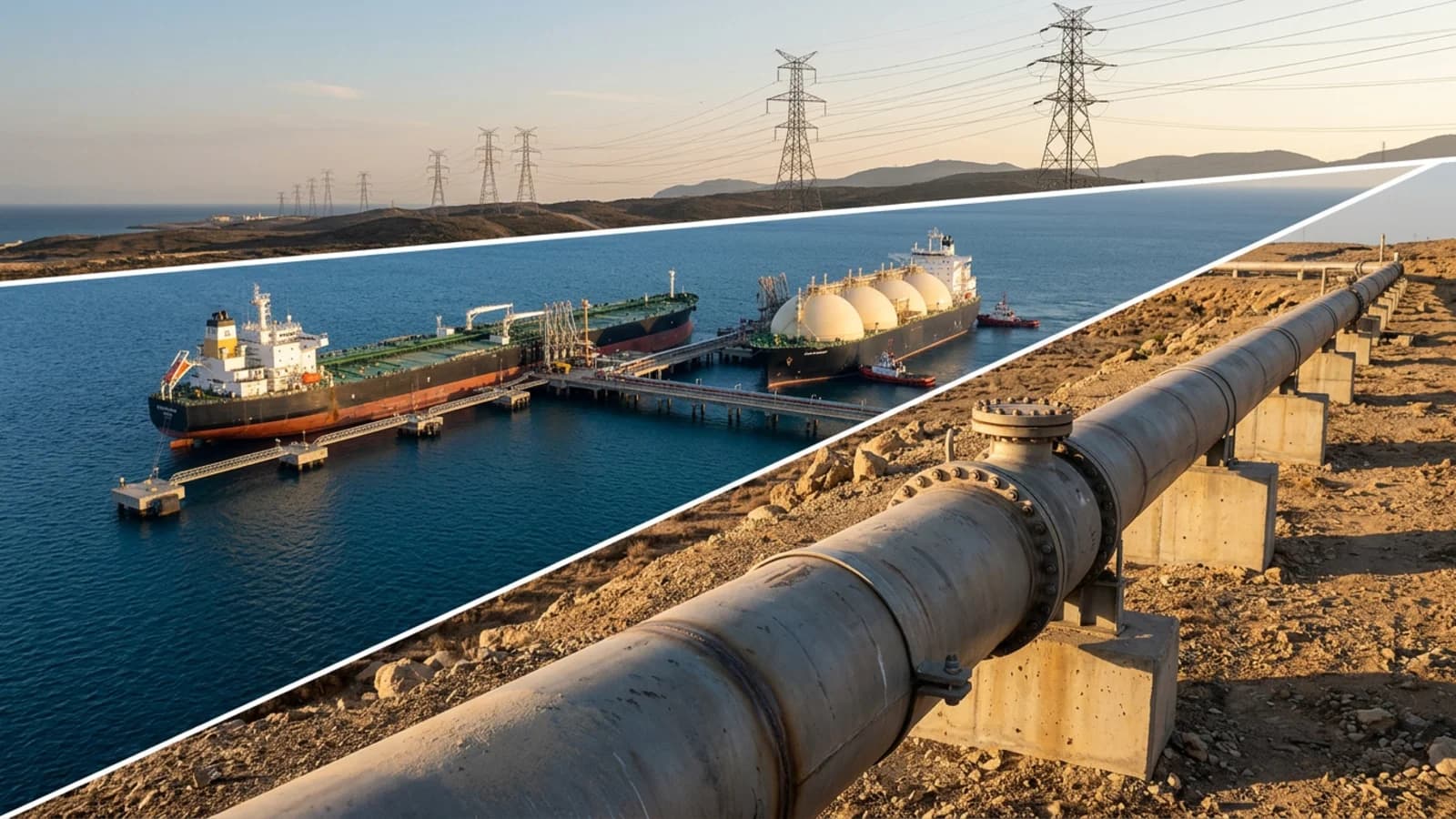
New production capacity changes the map of LNG supply, but access to additional cargoes alone does not settle the questions facing buyers. Price volatility, storage capacity and the development of alternative marine fuels also influence investment decisions. The 13th International LNG Congress (LNGCON) 2027 brings producers, infrastructure operators and end users together on 1-2 March 2027 in Amsterdam, the Netherlands to discuss these developments across the LNG value chain.
According to the International Energy Agency, new projects in North America, Africa and Australia help offset reduced LNG deliveries from the Gulf in 2026. Despite this additional output, prices in Asia and Europe remain above 2025 levels. The agency also notes that supply disruptions affect the outlook for 2027. More production therefore offers buyers additional options, while the location, timing and cost of each cargo remain critical to supply decisions.
For more than a decade, LNGCON has offered a closed-door setting for direct discussions between LNG companies. This year, the changing supply outlook gives those conversations a clear starting point: the development of new sources and the infrastructure needed to bring them to market.
Geography plays an increasingly important role in project implementation. Floating LNG facilities can bring production to locations that require a different approach to onshore infrastructure. At LNGCON 2027, Adel Alebady, Senior Vice President of Business Development at Golar LNG, discusses the role of floating LNG in opening new areas for development. His perspective links the choice of production technology to a broader commercial question: how new sources reach customers in an uncertain market.
Demand also differs across regions. Yosuke Sato, Vice President of Corporate Planning at JOGMEC, presents Japan’s perspective on LNG market dynamics, energy security and cooperation across Asia. In Europe, diversification depends on more than the number of suppliers. Import capacity, commercial partnerships and the ability to manage fluctuations in deliveries all affect access to gas. Timm Kehler, CEO of Die Gas und Wasserstoffwirtschaft, discusses Europe’s position in the global LNG market, while Gregor Wenzel, Head of Division Sales & Commercial Operations at Storengy Deutschland GmbH, focuses on the role of gas storage in securing supplies.
The market’s evolution also concerns the way LNG is used. For ferry operators, fuel decisions extend beyond the initial choice of LNG to the availability and cost of renewable alternatives. Pablo Garcia Anduiza, New Projects Director at Baleària, points to both factors: “The volatility of fuel prices and the availability of bio LNG affect the pathway for vessels using LNG. Biofuels support progress towards 2030 or 2035, but the next stage requires e fuels or similar alternatives to meet new regulations.”
Beyond the business programme, LNGCON 2027 brings together decision-makers from across the LNG value chain in a closed-door setting. More than 300 planned B2B meetings give producers, infrastructure operators, shipping companies and technology providers space to explore projects and develop commercial partnerships.
See how they respond to changing market conditions at LNGCON 2027 in Amsterdam: https://sh.bgs.group/54z