

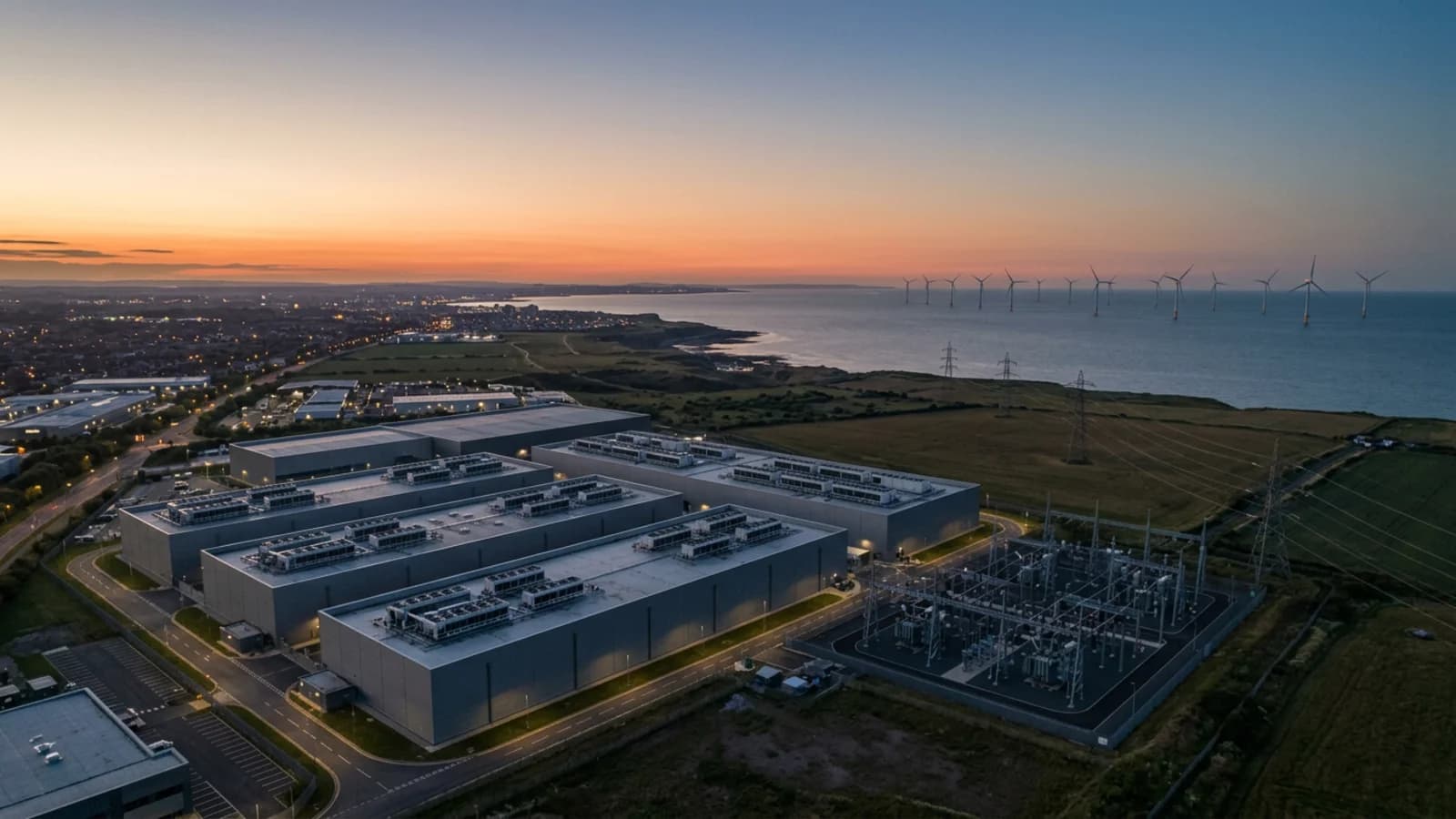
In September 2026, Australian construction and electrical industry associations raised a concern that few people would immediately connect with artificial intelligence. The rapid expansion of data centers was increasing competition for electricians, communications technicians, and specialist construction workers at a time when housing and infrastructure projects were already struggling to secure skilled labor.
It was an interesting reminder that the future of technology depends on some very traditional professions. A company may invest billions of dollars in advanced processors, but those computers cannot operate without reliable electricity, cooling systems, communications networks, physical security, and people capable of installing and maintaining the infrastructure.
This is the less visible side of the AI boom. While public attention concentrates on software, automation, and increasingly powerful models, a substantial industrial economy is developing around the physical systems that make computing possible. It reaches into electricity generation, mining, semiconductor manufacturing, construction, telecommunications, engineering, security, and financial investment.
In Part 1, we looked inside a data center to understand the equipment and systems required to keep it running. Now it is worth stepping outside the building to consider a broader question: what happens to the rest of the economy when the world suddenly needs much more computing power?
The answer is considerably more interesting than simply building more server rooms. Data center development is influencing where energy infrastructure is built, which materials are in demand, how skilled workers are employed, and why companies are experimenting with computing facilities beneath the ocean and even in space.
The Electricity Problem Behind the AI Boom
Before a data center developer can begin installing computers, it must solve a problem that is becoming increasingly difficult: obtaining enough electricity.
Large computing facilities require substantial and reliable power supplies. The electricity supports not only processors and memory, but also cooling systems, networking equipment, security infrastructure, and the electrical systems needed to maintain uninterrupted operations. As AI computing becomes more intensive, the electricity requirements of some proposed developments are reaching levels more commonly associated with major industrial facilities.
The International Energy Agency estimated that data centers consumed approximately 415 terawatt-hours of electricity worldwide in 2024. In its 2025 Energy and AI report, the agency projected that demand could more than double to approximately 945 TWh by 2030. The figures are global, but the practical challenges tend to be local. A regional electricity network may have limited capacity to accommodate a new computing campus, particularly where industrial development, population growth, and electrification are already increasing demand.
For a developer, electricity availability can determine whether a project is commercially viable. Land can be acquired, financing arranged, customers secured, and computing equipment ordered, but if the local electricity network cannot supply the required power, the project may face years of delays. New substations, transmission lines, transformers, and connections cannot always be delivered on the same schedule as a new building.
This helps explain why major technology companies are becoming more directly involved in energy development.
In September 2024, Constellation Energy announced a 20-year electricity purchase agreement with Microsoft supporting the proposed restart of Unit 1 at the former Three Mile Island nuclear facility in Pennsylvania. Renamed the Crane Clean Energy Center, the project is intended to bring approximately 835 megawatts of generating capacity back into service, subject to the necessary engineering and regulatory requirements.
Google has taken a different approach through an agreement with Kairos Power to support advanced nuclear reactor development, targeting up to 500 megawatts of capacity, with initial deliveries planned from 2030. Amazon has also backed advanced nuclear technology through X-energy.
These agreements do not mean that nuclear power will become the standard electricity source for data centers. Renewable energy, natural gas, existing power networks, batteries, and other technologies will continue to play significant roles. What makes the agreements noteworthy is the changing relationship between technology and energy companies. Major computing businesses are helping to support investment in future electricity generation rather than relying exclusively on capacity already available in the market.
For energy producers, this introduces a new class of large, potentially long-term customers. For manufacturers of transformers, switchgear, battery systems, and other electrical equipment, it creates additional demand. For governments, however, it raises questions about how new computing infrastructure should compete with housing, transport, manufacturing, and other essential electricity users.
The AI boom is therefore becoming an energy planning issue as much as a technology investment story.
The Skilled Trades Building the Digital Economy
Once electricity is available, the next challenge is turning an industrial site into a reliable computing facility. This is where the importance of skilled trades becomes obvious.
Data centers contain extensive electrical and mechanical infrastructure. Transformers and switchgear control the movement of electricity throughout the facility. Battery systems and backup generators protect against interruptions. Cooling equipment removes heat from the processors. Pumps, valves, sensors, pipework, and control systems help maintain stable operating conditions. Fiber-optic networks connect the equipment to customers and other facilities.
Electricians are essential throughout this process. They install and maintain electrical distribution equipment, cabling, control systems, and backup infrastructure. High-voltage specialists work on major electrical connections, while commissioning engineers test whether the systems operate correctly before the facility is handed over to customers.
Commissioning deserves particular attention because the consequences of a failure can be substantial. Before a data center begins operating, engineers need to test what happens when the main electricity supply is interrupted, whether backup systems activate as designed, and whether cooling equipment continues operating under different conditions. These tests may expose problems that would be extremely expensive to discover once customers depend on the facility.
The opportunities extend well beyond electrical work. Plumbers, industrial pipefitters, refrigeration mechanics, and mechanical services contractors are becoming increasingly relevant as the industry adopts more sophisticated cooling technologies.
Conventional servers can often be cooled by circulating air through equipment rooms. However, advanced AI processors generate considerable heat, and densely packed computing systems can require more effective heat removal. Liquid cooling transfers heat through carefully designed fluid circuits, pumps, heat exchangers, and cooling distribution equipment.
NVIDIA's GB200 NVL72 system, for example, combines 72 Blackwell GPUs and 36 Grace CPUs in a liquid-cooled rack-scale configuration. Installing infrastructure capable of supporting equipment of this kind requires far more than ordinary building plumbing. Pipework must be carefully designed, fluid circulation monitored, and connections installed to demanding standards. A failed valve or leaking connection could threaten highly expensive equipment.
For an experienced plumber or refrigeration mechanic, this creates a potential pathway into a specialized market. For engineering firms, it creates opportunities in thermal management, cooling system design, monitoring, and maintenance.
Security professionals also have an important role. Modern data centers support financial services, healthcare systems, public institutions, and commercially sensitive information. Their protection involves more than cybersecurity software. Facilities often require controlled access points, surveillance cameras, alarms, perimeter security, visitor management, and trained personnel responsible for responding to incidents.
Electronic security technicians install and maintain these systems, while cybersecurity professionals protect the digital networks and information. Fire protection specialists develop detection and suppression arrangements suitable for buildings containing valuable electronic equipment and extensive electrical infrastructure.
The construction workforce is equally diverse. Civil contractors prepare sites, steelworkers and builders construct facilities, crane operators move large equipment, telecommunications technicians install fiber networks, and specialist contractors complete the mechanical and electrical systems.
What makes the work particularly demanding is the need for reliability. A defect that might cause a minor inconvenience in another commercial building can create serious problems in a facility supporting critical computing services.
According to Uptime Institute's 2025 outage analysis, more than half of surveyed respondents who experienced a significant, serious, or severe data center outage reported that their most recent incident cost over US$100,000. Around one in five reported costs exceeding US$1 million. These figures illustrate why operators place such importance on maintenance procedures, equipment redundancy, staff training, and operational discipline.
The employment implications are significant, although they need to be considered carefully. Constructing a large data center can create substantial demand for contractors and skilled trades, but permanent employment after completion is often relatively modest compared with the capital invested. The broader opportunity lies in developing a local industry of equipment suppliers, engineering businesses, maintenance specialists, security providers, and technical training organizations.
This is particularly important for countries seeking to attract data center investment as part of a wider economic development strategy. A facility may be built with billions of dollars, but the lasting local benefit depends partly on whether domestic businesses and workers can participate in supplying and operating it.
Why AI Is Connected to Copper Mines and Semiconductor Factories
The industrial connections become even more interesting when we follow the equipment back to its origins.
A modern data center requires considerable quantities of electrical and construction materials. Copper is used extensively in cables, transformers, and power distribution systems, while steel and aluminum support buildings and equipment. Silicon remains essential to semiconductor manufacturing, with additional specialized materials required for batteries, electronic components, and other systems.
This connects the growth of computing to mining economies such as Australia and Chile, metal-processing industries, electrical equipment manufacturers, and international logistics networks.
The relationship is not simply about greater demand for raw materials. Those materials must pass through specialized manufacturing processes before they can be used in data center infrastructure. A new electricity substation, for example, requires transformers and other equipment that may have long manufacturing lead times. A developer may be able to purchase land and begin construction but still face delays while waiting for critical components.
Semiconductors introduce another layer of complexity. Companies such as NVIDIA and AMD design advanced processors, but their manufacture depends on sophisticated production facilities and highly specialized equipment. TSMC is a major manufacturer of advanced chips, while companies such as ASML, Samsung, SK hynix, and Micron play important roles across semiconductor equipment and memory supply chains.
These capabilities are concentrated among relatively few companies and countries. That concentration creates commercial dependencies and increasingly important geopolitical questions. Countries investing in domestic AI infrastructure may still depend on overseas suppliers for advanced processors, memory, manufacturing equipment, and specialized technology.
For governments, this complicates the idea of technological sovereignty. Building a data center within national borders can provide greater control over where information is processed, but it does not automatically create independence from international semiconductor or software supply chains.
There is also an interesting relationship in the opposite direction. Mining companies, manufacturers, and engineering firms increasingly use AI and advanced computing to analyze data, automate operations, and improve productivity. The industries supplying the materials for data centers are also becoming customers of the computing capacity those facilities provide.
It is a useful example of how the distinction between traditional industry and technology is becoming less meaningful.
When a Data Center Becomes Part of a City's Heating System
One of the more imaginative developments in data center engineering involves finding a useful destination for the heat produced by computing equipment.
Ordinarily, removing heat is an operating expense. Cooling systems consume electricity and require significant investment, particularly in facilities housing high-density AI equipment.
But in colder regions, there may be demand for that heat.
In Finland, Microsoft and energy company Fortum have been developing a project to capture waste heat from planned data centers in the Espoo and Kirkkonummi region and transfer it into a district heating network. District heating systems distribute hot water through underground pipes to provide warmth for homes, offices, schools, and other buildings.
The arrangement requires more than simply connecting two pipes. Heat pumps can be used to raise recovered heat to useful temperatures, while the district heating operator must manage distribution and changing seasonal demand.
Sweden provides another example. Stockholm Exergi's Open District Heating initiative allows suitable businesses, including data center operators, to supply excess heat into the city's heating network.
These projects are appealing because they connect two industries with complementary requirements. The data center needs to remove heat, while the heating utility needs a reliable source of thermal energy.
The economics are location-dependent. A data center far from an established heating network may have no practical customer for its waste heat. Installation costs, temperature requirements, and operating conditions also affect whether a project makes financial sense.
Nevertheless, the approach illustrates an important principle: data centers can sometimes become useful components of wider energy systems rather than simply large electricity consumers.
It also creates work for mechanical engineers, pipefitters, heat-pump manufacturers, controls specialists, and local infrastructure contractors.
The building that processes information can also help heat the neighborhood.
Taking Computers Underwater
If cooling is such an important challenge, placing computing equipment underwater begins to sound less eccentric than it first appears.
Microsoft explored the idea through Project Natick, an experiment that placed a sealed capsule containing 864 servers on the seabed near Scotland's Orkney Islands in 2018. The capsule operated approximately 36 meters underwater for around two years.
When Microsoft recovered the equipment, researchers reported that the underwater servers had experienced roughly one-eighth the failure rate of comparable servers operating on land. The controlled environment, stable conditions, and reduced exposure to certain contaminants were believed to have contributed to the result.
Microsoft eventually ended the underwater data center program in 2024, although the company retained the technical lessons from the experiment.
China has continued investigating the commercial possibilities. HiCloud began testing underwater computing technology near Hainan before progressing toward commercial deployments. In May 2026, a project off Shanghai entered operations with approximately 24 megawatts of capacity, combining underwater cooling with electricity associated with offshore wind generation.
The idea brings together offshore engineering, renewable energy, and computing infrastructure. Seawater can provide cooling, sealed modules can create controlled operating environments, and coastal installations may benefit from proximity to cities and communications networks.
However, underwater computing introduces practical difficulties that conventional facilities do not face. Replacing equipment is more complicated, maintenance costs can be substantial, and operators must consider pressure, corrosion, long-term reliability, and environmental impacts from releasing heat into marine environments.
A commercial project must demonstrate that the benefits outweigh these additional costs over its operating life.
For now, underwater computing appears more likely to serve specialized coastal applications than replace large land-based facilities. The developments are nevertheless worth following because they show how engineers are reconsidering the physical design of computing infrastructure.
The Even More Unusual Possibility: Computing in Space
The exploration of alternative locations does not stop at the ocean.
Several organizations are investigating whether advanced computing can be performed in orbit.
The most practical early applications involve processing information generated by satellites. Earth-observation systems collect large quantities of imagery and sensor data, much of which must be transmitted to ground stations for analysis. Processing selected information in orbit could reduce the volume of data transmitted and allow useful results to reach customers more quickly.
For example, a satellite monitoring agricultural land might identify changes in crop conditions before sending selected observations to Earth. Similar systems could support environmental monitoring, maritime surveillance, and scientific research.
China's Three-Body Computing Constellation, led by Zhejiang Lab, launched an initial group of 12 satellites in May 2025 as part of a wider orbital computing initiative.
Starcloud has also experimented with advanced processors in orbit, while Google's Project Suncatcher is investigating the technical feasibility of operating AI computing hardware in space. In October 2026, Google reported successful progress with an orbital prototype.
These developments are genuine engineering achievements, but the economics remain highly uncertain.
Launching equipment into orbit is expensive. Radiation can damage electronics, communications systems must operate reliably, and maintenance is difficult. Even cooling presents an unusual challenge. Although space is cold, it contains no surrounding air to carry heat away, so equipment must reject heat through specially designed radiation systems.
The mass of those systems adds to launch costs.
There is a considerable difference between processing satellite information in orbit and building large orbital facilities capable of competing with terrestrial cloud computing.
The first offers identifiable practical benefits. The second would require major advances in launch economics, thermal management, communications, hardware reliability, and the commercial value of orbital processing.
For now, space computing remains an emerging research and development field rather than an established alternative to conventional data centers.
Its importance lies partly in what it reveals about the search for new computing infrastructure solutions.
The Global Competition to Host Computing Infrastructure
The expansion of data centers is also changing the economic strategies of countries.
The United States remains an important center for advanced computing, AI development, semiconductor design, and cloud infrastructure. China is pursuing domestic computing capabilities and new infrastructure models. The UAE and Saudi Arabia are investing in AI and digital infrastructure as part of broader economic diversification strategies.
India represents a growing market for cloud services, digital platforms, and advanced computing. Malaysia, particularly the Johor region, has attracted considerable data center investment, partly because of its location near Singapore and regional demand.
Australia offers political stability, an established digital economy, and renewable energy potential, although electricity infrastructure and skilled labor availability remain important constraints.
Northern Europe has advantages involving cooler climates, energy systems, and waste-heat reuse, while markets in Africa and South America are developing computing infrastructure to support growing regional digital demand.
However, attracting data center investment is not simply a matter of providing land or announcing a large project.
Countries need dependable electricity, telecommunications connectivity, appropriate regulation, technical expertise, and supporting industrial services.
They also need to decide what economic benefits they hope to capture.
A facility may represent substantial foreign investment without creating a correspondingly large permanent workforce. Greater long-term value may come from local construction businesses, specialist service providers, workforce training, digital innovation, and the growth of industries that depend on computing.
This makes data center development an industrial policy question as much as a property or technology investment decision.
Where the Real Business Opportunities May Be
Much of the public conversation about AI investment focuses on technology companies and the enormous sums being committed to computing infrastructure.
But the businesses benefiting from those investments have very different commercial models.
Electrical equipment manufacturers earn revenue supplying transformers, switchgear, and distribution systems. Cooling technology companies sell equipment and services needed to manage higher-density computing. Construction contractors deliver facilities, while security firms, telecommunications providers, and maintenance specialists supply essential supporting services.
Data center developers and operators invest in physical infrastructure and earn revenue from customers leasing computing capacity or facility services.
Power producers may benefit from long-term electricity contracts. Cloud providers and AI companies attempt to create value by selling computing and software services to businesses and consumers.
Each part of the industry faces different risks.
Equipment suppliers can experience strong demand during construction booms but may be exposed if development slows. Facility owners need reliable customers, appropriate financing, and competitive operating costs. Energy providers must consider generation economics, infrastructure requirements, regulation, and contract structures.
AI and cloud companies face the question of whether their customers will generate enough demand and revenue to support continued infrastructure investment.
This is important because the growth of an industry does not guarantee that every business participating in it will earn attractive returns.
For investors, the distinction between a company benefiting from increased activity and one capable of producing sustainable profits remains essential.
The same applies to individual data center projects. A proposed facility with uncertain electricity access and no committed tenants is very different from an operating site with long-term contracts and established customers.
The most useful questions concern power availability, construction costs, customer commitments, technical flexibility, financing, and the facility's ability to remain commercially relevant as computing technology changes.
Could the Industry Build Too Much?
There is a possibility that expectations for AI infrastructure growth will prove too optimistic.
Technology companies are investing heavily in computing capacity, governments are seeking domestic AI infrastructure, and investors are attracted by expectations of long-term digital demand.
Yet the commercial future of AI applications is still developing. Businesses are experimenting with technology whose productivity benefits and revenue potential vary considerably across industries.
At the same time, semiconductor improvements, more efficient models, and changes in computing architecture could affect how much infrastructure is required for particular workloads.
This creates uncertainty.
Some facilities may prove highly successful. Others may face lower utilization, delays, or financial pressure if demand develops more slowly than expected.
There are historical comparisons with railway development and the telecommunications expansion of the late 1990s. Both attracted substantial investment, and both experienced periods in which financial expectations exceeded commercial reality.
Yet the underlying infrastructure often remained useful long after speculative enthusiasm had faded.
Data centers may follow a similar pattern. Computing can become more important to the economy while individual investments fail to deliver satisfactory returns.
That is why it is important to separate the long-term importance of the technology from the financial prospects of a particular project.
Why This Matters for Industry Events
The most interesting opportunities in the data center economy often emerge between industries that do not usually work closely together.
An electrical contractor may have the expertise required to install critical power infrastructure but limited knowledge of data center development pipelines. A refrigeration specialist may understand industrial cooling but be unfamiliar with the requirements of advanced AI processors.
An energy company may have potential generation capacity without established relationships with computing infrastructure developers. A security provider may already possess relevant experience protecting critical facilities but not recognize data centers as a potential market.
These are precisely the kinds of connections that industry conferences, technical exhibitions, investment forums, and professional gatherings can help create.
A data center conference may introduce an electrical engineering company to developers planning new facilities. An energy summit can help technology businesses understand electricity market constraints. A manufacturing exhibition may reveal advances in cooling equipment, prefabricated modules, or electrical components.
A cybersecurity event can provide insight into how operators protect increasingly critical systems, while a construction or workforce development forum may reveal shortages in specialist trades and opportunities for training providers.
For professionals, the value lies in understanding how their existing expertise connects with an expanding industry.
An electrician, plumber, refrigeration mechanic, engineer, security specialist, or construction manager does not necessarily need to change careers to benefit from the growth of digital infrastructure. In many cases, the opportunity is to develop additional capabilities and apply familiar skills in a new environment.
The same applies to businesses.
A manufacturer may discover a new customer group. A training organization may identify an emerging qualification requirement. An investor may find an opportunity in a supporting industry rather than in a data center itself.
Industry events become valuable when they help people make those connections and understand where demand is developing.
The Bigger Picture
The most interesting thing about the data center economy is how thoroughly it connects the digital and physical worlds.
A simple AI request can depend on advanced semiconductors manufactured in Asia, electricity generated thousands of kilometers away, copper extracted from the ground, precision cooling systems, skilled electrical workers, and communications networks stretching between continents.
The facilities supporting that request may influence local electricity planning, construction employment, manufacturing demand, and national technology strategies.
They may also create opportunities in areas that receive relatively little attention in discussions about artificial intelligence: industrial plumbing, refrigeration, physical security, maintenance, fire protection, electrical testing, and technical education.
At the experimental end of the industry, engineers are exploring underwater computing modules and orbital processors. Some of those ideas may become commercially useful. Others may remain interesting technical demonstrations.
What is already clear is that the expansion of computing is having consequences far beyond software.
For business leaders, the challenge is understanding which parts of this growing infrastructure economy are relevant to their operations.
For investors, it is determining where sustainable value can be created rather than simply following investment announcements.
For skilled workers, educators, and employers, it is recognizing how established professions are becoming connected to new technologies and industries.
And for anyone interested in the future of industry, there is a useful lesson: the most important opportunities do not always appear where the attention is concentrated.
Sometimes they are found in the supporting systems, specialized skills, and practical problems that the entire industry depends on.
In the case of data centers, that can mean following the story from an AI processor to an electrical substation, a refrigeration workshop, a copper mine, or even a satellite in orbit.
It is a much larger story than computers in a building.
Industry Events | IE Insights
Explore upcoming conferences, summits, exhibitions, and professional forums covering data centers, artificial intelligence, electrical engineering, construction, cybersecurity, energy, and advanced manufacturing at industryevents.com.